Managing Recital Rehearsals Without Teacher Burnout
How studios are using multiple shorter shows, non-consecutive scheduling, and delegation models to prevent the 60-hour workweeks that drive teacher turnover.
Key Takeaways
- Acute burnout during recital season typically occurs when teachers work 60+ hours per week with back-to-back rehearsals, especially when multiple choreography pieces must be learned in compressed timeframes, leading to muscle damage, mental fatigue, and retention risk.
- Multiple shorter performances reduce burnout more effectively than marathon shows; studios running three 90-minute recitals rather than single 3-hour productions report cleaner routines and better teacher recovery.
- Non-consecutive rehearsal scheduling with built-in rest days (for example, Monday-Tuesday-Thursday evenings with Wednesday, Friday, and Saturday off) allows teachers and students to recover between sessions while maintaining performance quality.
- Early choreography preparation starting months before recital season prevents frantic last-minute cramming sessions that consume class time and trigger psychological stress in both teachers and students.
- Delegation through student assistants and parent volunteers combined with scheduling automation tools can save 8-10 hours weekly on administrative tasks and eliminate double-booking that stretches teachers beyond capacity.
- Owner modeling of sustainable practices creates a trickle-down effect where leadership signals about rest, recovery-based scheduling, and reasonable workload expectations become studio culture rather than exceptions.
The Recital Season Burnout Crisis
Acute burnout in dance teachers often surfaces at the start of recital season when instructors are expected to teach regular technique classes while simultaneously choreographing, rehearsing, and perfecting multiple performance pieces in compressed timeframes. One studio director interviewed by Dance Teacher Magazine described working 60 hours per week, noting "the planning aspect never shuts off—I'm at dinner thinking about what's next or in the shower thinking about casting."
This workload pattern creates more than individual stress. A 2025 Dance Psychology analysis specific to studio owners found that burnout is the consequence of doing too much, often seen when schedules do not give adequate time to rest and recover. Studios inadvertently create conditions for burnout when they build rehearsal calendars without considering recovery time. As studios compete for staff retention in 2026, sustainable rehearsal practices have shifted from wellness preference to business necessity, with instructor burnout prevention strategies now central to operational planning across movement disciplines.
The Math of Multiple Shorter Performances
Show structure directly impacts teacher workload and burnout risk. According to Dance Teacher Magazine, there are two factors when deciding if additional shows are needed: running length and audience capacity. One Wisconsin studio with 175 students operates three recital shows, each capped at 90 minutes maximum. One Phoenix studio owner stated flatly that "two hours is the most anybody can stand."
This approach contrasts sharply with traditional single-show formats that stretch to three hours or more. In the multiple-show model, recreational students perform their routines once in one show, while competition dancers have a separate showcase for numbers they have competed all year. Repeat performances are limited to opening numbers, senior company pieces, and distinguished dancer routines. One California studio has taken this further, offering six separate performance times on a single day. These formats reduce the total rehearsal burden per teacher while maintaining performance opportunities, as each show requires fewer pieces to be stage-ready simultaneously.
Strategic Show Segmentation
The segmentation strategy allows teachers to focus rehearsal intensity on smaller repertoire sets rather than preparing 20-30 pieces to performance level at once. This directly addresses what Dance Teacher Magazine identifies as over-rehearsing: spending extra hours scheduling more coaching sessions or repeating variations, which leads to mental and physical fatigue, injury, and loss of joy in performing.
Scheduling Rehearsals for Recovery, Not Just Revenue
Rehearsals should be scheduled so that dancers and teachers can recover between sessions and have time to absorb new movement. Blake Piatczyc, owner of BPM Dance Complex in Missouri, advises studios to only schedule the rehearsals and technique classes that participants actually need "so they're getting that conditioning and building stamina, but they have time to just be kids, too."
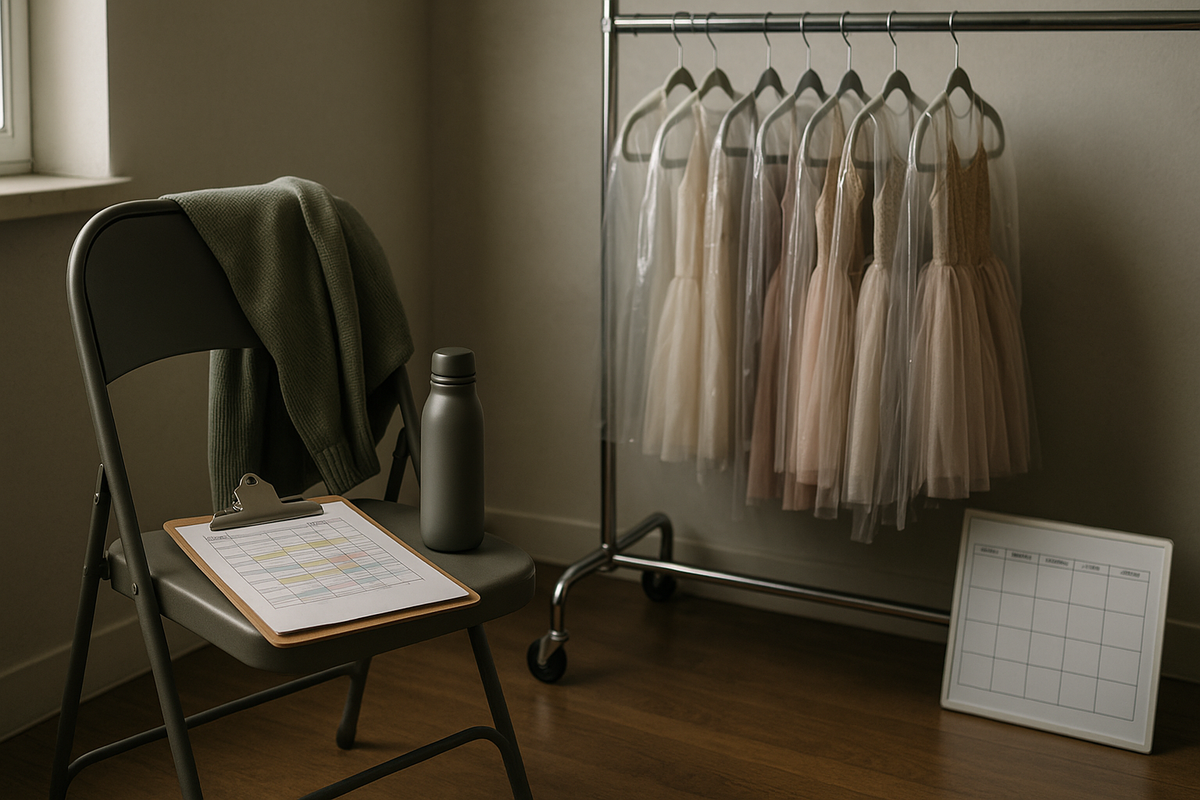
One studio implementing this philosophy schedules senior and advanced dancers three nights per week during competition season—Monday, Tuesday, and Thursday from 4:30 to 9:30 pm, with Sunday rehearsals added closer to performance dates. Having Wednesday, Friday, and Saturday off allows study time and personal balance. One director who broke the habit of scheduling classes and rehearsals back-to-back noted that 10- to 15-minute breaks between sessions are "super-helpful to refresh the mind and ensure peak performance."
Rest as a Performance Advantage
Jenna Eberhardt, competition director of Dance Cavise Studios in New York, prioritizes her own rest during built-in holiday breaks and encourages students to do the same. "After some time off, everyone comes back refreshed and the routines look cleaner," Eberhardt explained. This approach treats recovery-based scheduling as infrastructure rather than afterthought, recognizing that cognitive and physical restoration directly improves performance outcomes.
The Prep-Ahead Advantage for Choreography
Starting work on dances early in the season prevents frantic cram sessions as recital approaches, ensuring teachers do not consume excessive class time on routines at the expense of curriculum instruction. Dance teachers create many choreography pieces annually between competitions, winter concerts, and recitals, making choreography burnout a very real concern.
Early preparation allows teachers to use class time efficiently through delegation tactics. Directors can divide hefty agenda items into sub-parts: when a trio section rehearses, remaining dancers work together to review other sections, or an advanced student pre-teaches choreography before rehearsal and leads one group while the teacher works with others. This model builds on proven delegation and staffing models that develop assistant capabilities while reducing primary instructor load.
Staffing Models That Distribute Workload
Many dance studios employ older students—high school and college-aged—as instructors for younger kids who also help with office work or recital production tasks. Some studios have found success employing parents as part-time or as-needed employees who handle memberships, costume coordination, or any task that does not require dance expertise.
Recital preparation draws on teachers, reception staff, costume assistants, photographers, volunteers, and venue personnel. Individual profiles in management systems can show assigned duties, access permissions, working hours, and contact details. Mobile access lets employees review responsibilities between rooms or backstage areas, with clear ownership reducing duplicated effort that typically falls on lead teachers.
Technology That Prevents Double-Booking Burnout
Dance studio scheduling software prevents double-booking teachers and provides the guardrails studios need "since teachers can't be in two places at once." A recital calendar should include registration cutoffs, rehearsal blocks, dress practices, ticket releases, and show times. Managers can assign each item to a room, instructor, or cohort before enrollment opens, and staff can spot overlapping bookings, missed deadlines, or insufficient prep time before issues reach the stage.
Rehearsal Quality Over Repetition Volume
Repetition is important, but there has to be a reason. Teachers should break variations into beginning, middle, and end sections, working on them separately before full run-throughs. Instead of running a piece three times consecutively, run it once, give notes, then play the music and ask students to lie on the floor and visualize themselves moving through the piece step by step.
The Pomodoro Technique—breaking rehearsals into focused intervals such as 25 minutes followed by short breaks—helps maintain concentration and prevent burnout. Directors should recognize that despite well-laid plans, it may be impossible to complete everything on the list. Identifying priorities and deciding where to invest time means concentrating on cleaning and rehearsing pieces for the upcoming performance and shelving new choreography until the following rehearsal.
Owner Modeling Sets Studio Culture
A studio owner's role has a trickle-down effect. They are positioned to be role models for teachers, and they should work with faculty to set a code of conduct ensuring the studio is a safe space. When planning the recital, owners should encourage and enforce practices including no oversexualization of choreography, music, and costumes.
Studios that will thrive are those treating student and teacher psychology as infrastructure, not afterthought. This means training faculty in motivational theory alongside technique correction and building schedules that account for recovery rather than revenue maximization alone. This leadership approach aligns with broader staff retention during peak seasons strategies showing that instructors leave due to burnout and lack of schedule control, not compensation issues.
What This Means for Studio Operators
Editorial analysis, not reported fact:
The shift from crisis-mode recital planning to recovery-based scheduling represents a structural change in how competitive studios operate in 2026. Owners facing 18-20% annual teacher turnover cannot afford to treat recital season as an acceptable period of unsustainable workload. The evidence from studios running multiple shorter shows and non-consecutive rehearsal schedules demonstrates that operational changes improve both performance quality and staff retention.
Immediate implementation steps include auditing current recital calendars for back-to-back scheduling, calculating total weekly teacher contact hours during peak season, and identifying which administrative tasks can shift to student assistants, parent volunteers, or automation tools. The Wisconsin studio's 90-minute show limit and the Missouri studio's "only necessary rehearsals" policy provide concrete benchmarks. Studios waiting to implement these changes until after spring 2027 recital season risk losing experienced teachers to competitors who have already adopted recovery-based scheduling as standard practice.
Sources & Further Reading
- Competition Dance Burnout, Dance Teacher Magazine coverage of rehearsal scheduling and recovery strategies
- Over-Rehearsing: When Too Much Isn't Enough, signs of rehearsal burnout and meaningful practice techniques
- Dance Psychology: Student Motivation & Burnout in 2026, recovery-based scheduling framework and motivational theory
- How Dance Studios Manage Recitals and Events with Software, technology solutions for coordinating staff and reducing admin burden
- Streamline Staffing with Dance Studio Scheduling Software, preventing double-booking and workload distribution tools
- Pilates Instructor Turnover: Burnout & Retention Solutions, contact hour caps and retention strategies applicable across movement disciplines
Editorial coverage of publicly reported industry developments. Dance Studio Journal has no commercial relationship with any companies named.