Seasonal Scheduling for Dance Studios: Recital & Competition
Growing studios must juggle regular classes, recital prep, and competition teams. Here's how to adjust your calendar without burning out staff or losing students.
Key Takeaways
- Enrollment growth is creating new bottlenecks: Dance studios are experiencing nearly 10% year-over-year enrollment growth in the 2025-26 season, and 28% now cite recital rehearsal coordination as their biggest logistical challenge.
- Recital and competition seasons follow different timelines: Competition teams rehearse intensively in fall, compete January through July, while recitals typically land in May-June, requiring studios to run parallel tracks of regular classes, recital prep, and competitive rehearsals simultaneously.
- Seasonal revenue swings demand active cash management: Studios see spikes during late summer registration and recital season, with 15% of annual revenue from recital-related fees, but cannot simply divide annual revenue by twelve—saving during peak months is essential to cover lean periods.
- Recitals are the most powerful retention event: 68% of students who attend a recital re-enroll for the following season, but summer breaks the weekly habit and represents the easiest place for dropout losses to go unnoticed.
- Multi-show logistics require systematic planning: Growing studios now split enrollment into two or more recital performances to maintain the two-hour show standard, but must prioritize keeping siblings together and avoiding back-to-back routines for dancers in multiple classes.
- Make-up class policies prevent silent dropouts: 45% of dropouts cite scheduling conflicts as a primary reason for leaving, making visible, easy-to-use make-up policies a critical retention tool.
The Structural Challenge: Three Schedules in One Facility
Most dance studios face a complex scheduling reality between September and June: they must simultaneously run regular weekly classes for recreational students, layer in recital rehearsals as shows approach, and maintain dedicated competition team training that intensifies in fall and winter. A recital is the culminating performance for weekly classes, requiring no additional nights until tech week, while competition is an entirely separate season with teams typically adding a second weeknight or Saturday block on top of regular class starting in fall.
According to ORO Dance, competitions typically begin in January and end in July or August, meaning competitive dancers are rehearsing intensively while recreational students are preparing for May-June recitals. This overlap creates scheduling bottlenecks in studio space, instructor availability, and family calendars. The operational challenge is not simply fitting more classes into the week, but architecting a calendar that prevents teacher burnout, accommodates sibling placement, and keeps revenue flowing across distinct seasonal peaks.
Avoiding Chaos During Critical Windows
Studios should avoid scheduling new student trials during the two weeks leading up to a recital, as the environment becomes too chaotic for a good first impression. Tech rehearsals, costume adjustments, and compressed schedules create a poor onboarding experience. Instead, focus recruitment efforts on post-recital momentum and early fall enrollment windows when operations return to steady state.
Revenue Patterns and Cash Flow Planning
Dance studios experience predictable but uneven revenue flows throughout the year. Beancount reports that studios see surges during late summer when registration opens, consistent monthly tuition during the school year, another spike around recital season, and potential summer camp revenue. However, the months between seasons can feel like a financial drought, and owners cannot simply divide annual revenue by twelve and call that a monthly budget.
Recital-related fees contribute 15% of annual studio revenue, but recitals are often revenue-neutral at best. Venue rental, costume coordination, tech rehearsals, programs, and photography quickly add up to thousands of dollars before a single ticket is sold. Studios that do not track event profit and loss separately often underestimate how much recital season compresses their annual margin, particularly when managing multi-show recital logistics across multiple performance slots.
Building Financial Reserves During Peak Months
Smart operators save during peak registration and recital months to cover lean summer periods. Summer intensive and workshop registrations fill the revenue gap between spring recital and fall enrollment, offering week-long ballet intensives, hip-hop workshops, or choreography camps as bookable events. These programs keep families engaged and spending through the off-season, preventing the complete revenue drop that occurs when studios close for summer break. Understanding seasonal cash flow risks helps studio owners avoid predatory financing during slow months.
Scheduling Frameworks to Reduce Burnout and Friction
Competition teams face particularly intense demands. Dance Teacher magazine notes that while full of excitement, competitions are mentally and physically taxing, and it is easy for dancers and instructors to feel run down after months of rehearsing and performing for hours every week. Studios carefully schedule only the rehearsals and technique classes that dancers actually need, ensuring they build conditioning and stamina but still have time to be children.
Some studios prioritize rest during built-in holiday breaks and encourage students to do the same. After time off, everyone returns refreshed and routines look cleaner. Team bonding activities and personal mentorship help ease the mental load for competitive students. This approach mirrors seasonal scheduling strategies used in other studio fitness businesses to prevent instructor burnout during high-demand periods.
Balancing Prime-Time Hours and Progression
Smart scheduling balances three goals: filling prime-time hours (typically weekday late afternoons and Saturdays), avoiding instructor and room conflicts, and building a progression so students always have a clear next class to move into. Studios should map their week around demand, group classes by age and level, and protect a few flexible slots for private lessons and make-ups. This structured approach to peak-demand scheduling ensures facilities operate efficiently during the busiest months without overextending teaching staff.
Retention Levers Across Seasonal Transitions
The recital is the most powerful retention event in the dance studio calendar. 68% of students who attend a recital re-enroll for the following season, according to Swyvel. Students who perform develop a bond with the studio, the discipline, and their classmates that is difficult to replicate any other way. However, summer breaks the weekly habit, and it is the easiest place for losses to go unnoticed until fall classes look thin.
A student who attends a summer intensive is very likely to re-enroll for autumn term because skills are fresh, social connections remain intact, and the studio is still a real part of their life. Smart studios set up re-enrollment tables at the recital with early-bird discounts for the next season, capturing emotional momentum to see re-enrollment rates jump 15-20% compared to studios that wait to push registration weeks later.
Make-Up Class Policies as Dropout Prevention
45% of dropouts cite scheduling conflicts as a primary reason for leaving. Studios should make their make-up class policy visible and easy to use, posting it on the website and mentioning it in enrollment conversations. A dancer who misses two or three weeks and feels too far behind to return is a dropout waiting to happen, while a dancer who knows they can make it up stays enrolled. This proactive approach to retention is as important as any marketing effort.
Multi-Show Logistics and Family Coordination
Multi-show formats are now standard for growing studios. Real-world examples like 24/7 Dance Studio Frederick run six separate recital slots over a single weekend. As enrollment climbs nearly 10% year-over-year, studios split enrollment into two or more groups to maintain the two-hour show standard while accommodating growth, though this approach introduces operational complexity that requires systematic planning.
Best practice pushes firmly against splitting families. Studios should avoid back-to-back routines for dancers in multiple classes and keep siblings together. Some studios prioritize getting any siblings in the same show to give parents relief from multi-show attendance. The communication cadence shifts dramatically with multiple performances: studios should build their entire recital timeline in one calendar covering extra rehearsals, tech week, dress rehearsal, and show dates, then assign each class a performance slot with the schedule published to all enrolled families instantly.
Early Communication and Timeline Transparency
Build your recital timeline at the start of the season and publish rehearsal dates early. Parents need weeks of notice to arrange schedules around tech week and show dates. Studios that communicate well through apps, parent portals, or consistent messaging see stronger family connection because parents value transparency and organization. This upfront planning reduces last-minute conflicts and prevents the scheduling chaos that leads to dropout.
What This Means for Studio Operators
Editorial analysis, not reported fact:
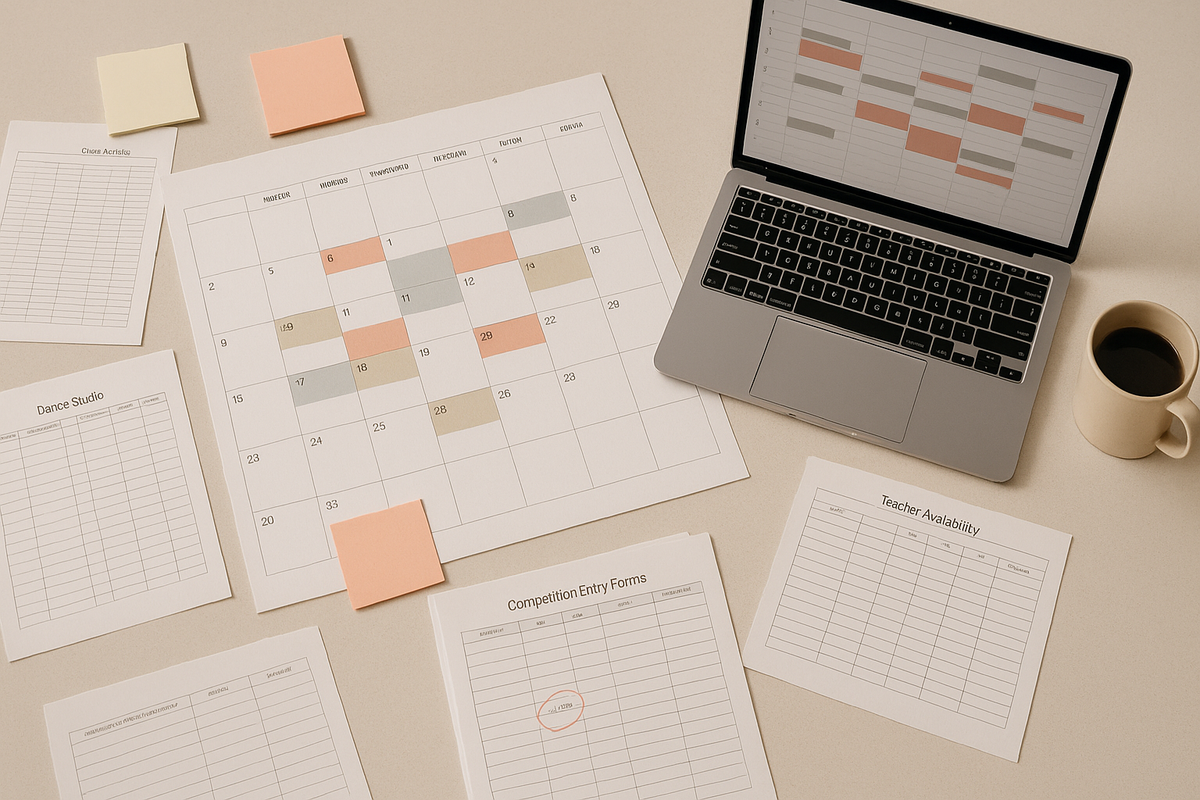
The operational challenge for growing studios is not choosing between recital prep, competition teams, or regular classes, but building a calendar architecture that accommodates all three without exhausting staff or alienating families. Studios experiencing enrollment growth must resist the temptation to simply add more hours to the schedule. Instead, focus on strategic placement: protect instructor rest periods during holiday breaks, group competition rehearsals into consolidated Saturday blocks rather than scattering them across weeknights, and use the recital itself as a re-enrollment event rather than waiting for momentum to dissipate over summer.
Cash flow planning must account for the reality that 15% of annual revenue arrives in concentrated bursts around recital season, and those dollars often carry hidden costs in venue rental and production expenses. Building a three-month operating reserve during peak fall registration and spring recital months creates the financial cushion needed to maintain payroll and facility costs during summer slowdowns. Studios that treat summer as dead time lose both revenue and enrolled students; those that offer targeted intensives and workshops retain the weekly habit that drives fall re-enrollment.
Finally, make-up class policies and early communication are not administrative details—they are retention infrastructure. A visible, easy-to-use make-up policy directly addresses the 45% of dropouts who cite scheduling conflicts, while publishing your full recital timeline at the start of the season prevents the chaotic scramble that erodes parent trust. The studios that thrive through overlapping seasons are those that treat scheduling as a strategic function, not an afterthought.
Sources & Further Reading
- Dance Studio USA Market Analysis 2026, enrollment trends and industry growth data
- Dance Studio Bookkeeping Complete Financial Guide, revenue patterns and recital-related fee data
- Retaining Students in Your Dance Studio, recital-driven re-enrollment statistics
- Dance Studio Scheduling Mistakes, dropout analysis and make-up class policy guidance
- Building a Smart Competition Season: A Studio Owner's Guide, competition timeline and team scheduling frameworks
- Competition Dance Burnout, mental and physical demands on competitive dancers and instructors
- Dance Studio Scheduling Software, multi-show recital examples and operational best practices
- Multi-Show Recital Planning for Dance Studios (2026), sibling placement and retention data for growing studios
Editorial coverage of publicly reported industry developments. Dance Studio Journal has no commercial relationship with any companies named.