Dance Teacher Certification Reciprocity Across States
K-12 dance teachers face state-by-state reciprocity hurdles, while private studio credentials from DMA and NDEO transfer seamlessly with no legal framework.
Key Takeaways
- K-12 dance teachers must navigate state-by-state reciprocity processes when relocating, which means application fees, background checks, and often additional coursework or exams even when states participate in the NASDTEC Interstate Agreement.
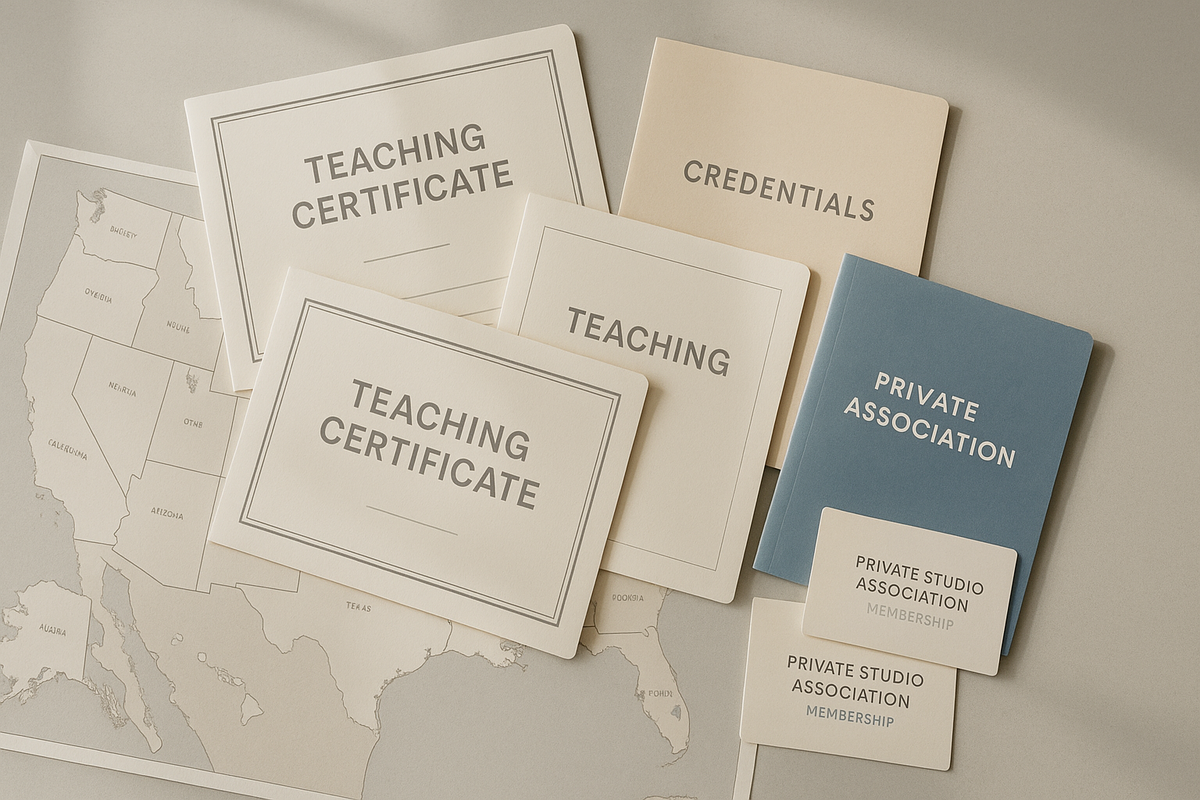
- Private studio credentials from Dance Masters of America, NDEO, and similar organizations are nationally portable but do not substitute for state teaching licenses and carry no legal reciprocity framework.
- Studio owners hiring out-of-state teachers face no legal certification mandate, but national credentials (DMA, NDEO CiDE, DEA) transfer seamlessly across state lines because they are professional designations, not state-issued licenses.
- Reciprocity does not mean automatic approval for public school teachers; Arizona grants a 1-year provisional certificate while New Jersey requires equivalent subject area and grade level licenses.
- Market pressure increasingly favors credentialed instructors in private studios even without legal mandates, as parents expect professional development and documented expertise from dance educators.
The Two-Track Dance Certification System
Dance education in the United States operates on fundamentally different credential tracks depending on whether you teach in public schools or private studios. There are no nationwide licensing requirements to become a dance instructor, as dance falls within the broader arts and fitness industry rather than regulated professional practice.
Teachers pursuing public school positions must obtain state educator licenses or certificates, typically requiring a bachelor's degree in education or completion of a state-approved certification program. According to the Education Commission of the States, 36 states certify educators in dance, with 32 offering full certification equal to other core content areas. Private studio instructors follow a completely separate path, with no state or federal licensing programs governing independent, private, or nonprofit dance instruction.
What Reciprocity Actually Means
Every U.S. state issues its own teaching licenses based on its own requirements. Reciprocity is a process where one state agrees to recognize your out-of-state license or count your existing certification, coursework, and testing history toward its own standards. However, reciprocity means your new state will consider your existing credentials, not that you receive automatic approval.
The receiving state typically participates in the NASDTEC Interstate Agreement, but almost every state still requires an application, fees, background checks, and sometimes additional coursework or testing before clearing you to teach. Arizona grants out-of-state applicants with comparable certification a 1-year provisional reciprocity certificate, then a 2-year provisional certificate upon fulfilling requirements including passing the Professional Knowledge portion of the AEPA Exam or documenting 3 years of out-of-state teaching experience. New Jersey educators seeking certification via reciprocity must hold the equivalent type and subject area or grade level out-of-state license.
Why Private Studio Credentials Don't Reciprocate
This distinction matters critically for studio owners recruiting talent and teachers planning relocations. The NDEO Certificate in Dance Education does not constitute nor replace state dance certification. The private school or studio teacher uses credentials like the CiDE to display competency in their studio, earn CEUs to attain or retain the Registered Dance Educator credential (RDE), and show evidence of lifelong learning in dance.
These credentials do not substitute for a state teaching license if the goal is a public school classroom. They qualify an instructor to teach privately at a studio or academy, or to add a specialized credential on top of an existing teaching license. Dance Masters of America, serving since 1885 as one of the largest dance teacher organizations in North America, offers professional certification that requires applicants to be at least 18 years old, actively teaching dance, and have a minimum of three years of teaching experience within the past five years. Candidates must pass an examination in each dance genre with a minimum score of 75%.
National Credentials and Geographic Portability
DMA membership is recognized nationally but is not a state credential. It functions as a professional designation that enhances credibility in private studio settings across state lines. Unlike state reciprocity frameworks, DMA certification and other national dance credentials (NDEO CiDE, DEA) are geographically portable because they are not state-issued.
A teacher with DMA certification from Florida can teach at a studio in New York without additional credential work because private studios accept these national credentials. However, if that same teacher wants to transition to public school teaching in New York, they must pursue New York's state educator license and reciprocity pathway, which may require exam passage, additional coursework, or proof of teaching experience.
The Competitive Pressure Reality
Private studio teachers face no legal mandate for continuing education, yet families increasingly expect credentialed instructors as competition and professional standards rise across the boutique fitness landscape. Dance studios face no universal legal mandate for instructor certification, but programs range from $400 to $6,200 depending on organization and specialty.
Background checks and safety screening represent the true baseline. States like California require background checks for staff with unsupervised minor access, and child protection training is becoming a standard expectation across the industry. Studio owners recruiting out-of-state talent should focus on whether the candidate holds nationally recognized credentials that demonstrate ongoing professional development, not whether their credentials "transfer" in a legal sense, because no such transfer mechanism exists outside K-12 settings.
What This Means for Studio Operators
Editorial analysis, not reported fact:
Studio owners hiring out-of-state instructors should clarify which credential track matters for the position. If you operate a private studio and recruit a teacher with DMA or NDEO certification from another state, no reciprocity process applies because these are professional designations, not state licenses. Verify the credential is current, request proof of liability insurance, and conduct the same background checks you would for any local hire.
If a teacher with public school dance experience in another state wants to continue teaching in your state's K-12 system, they must navigate that state's reciprocity process independently. Studio owners cannot facilitate state licensure reciprocity, but you can factor a candidate's credential portability into salary negotiations and professional development budgets. Teachers relocating from one private studio market to another carry their national credentials seamlessly, which simplifies onboarding compared to hiring a candidate who needs to pursue certification from scratch.
The market increasingly rewards studios that employ credentialed instructors, even without legal mandates. When hiring credentialed instructors, prioritize candidates with current national credentials (DMA, NDEO, DEA) and documented continuing education. This signals professional commitment and responds to parent expectations without requiring you to navigate state-level reciprocity complexities that do not apply to private instruction.
Sources & Further Reading
- National Dance Education Organization, dance education standards and private studio guidance
- Dance Masters of America, membership requirements and certification process
- Education Commission of the States, state-by-state dance certification report
- Teacher Certification Reciprocity Guide, how to transfer licenses across states
- Arizona Department of Education, dance educator certification and reciprocity pathways
- New Jersey Department of Education, certification reciprocity requirements
Editorial coverage of publicly reported industry developments. Dance Studio Journal has no commercial relationship with any companies named.