Sensory-Friendly Dance Classes: High-Loyalty Niche for 2026
With 1 in 31 children diagnosed with ASD and proven retention models, sensory-friendly classes offer studio owners a strategic revenue opportunity backed by scalable training.
Key Takeaways
- Market size: Approximately 1 in 31 children aged 8 years in the U.S. are diagnosed with ASD, representing over 2.3 million children under 18 plus 4.6 million parents actively seeking inclusive activities—a market extending beyond autism to include ADHD, sensory processing disorder, and other neurodevelopmental differences.
- Retention proof-of-concept: Chance 2 Dance scaled from 8 students in 2016 to over 1,400 dancers with 27 different disabilities, while research on Ballet for All Kids documented high retention driven by authentic training, sensory integration, and individualized support.
- Universal design eliminates stigma: Leading studios in 2026 redesign mainstream classes with accommodations such as noise-reducing earbuds, flexible participation, and predictable structures benefiting all learners rather than creating separate "special needs" tracks.
- Teacher training is scalable: More than 600 people have completed DanceAbility Teacher Certification courses since 1996, and programs like Rhythm Works Integrative Dance now offer live and on-demand certification workshops for teachers, coaches, and clinical professionals.
- Revenue model is competitive: Sensory-friendly classes are priced at or near mainstream rates ($27 per class at All That Dance Seattle), with niche positioning supporting adaptive programming revenue model differentiation in a slow-growth market.
- Institutional backing validates the model: Major ballet companies including New York City Ballet, Boston Ballet, and Nashville Ballet have launched structured adaptive programs, signaling industry-wide acceptance.
Why Sensory-Friendly Classes Are a Strategic Opportunity in 2026
Studio owners facing enrollment pressure in traditional recreational and competitive tracks now have a documented market opportunity: sensory-friendly dance classes serving neurodivergent learners, children with developmental disabilities, and their families. What was once viewed as a charitable add-on has shifted to a revenue-generating, loyalty-driving niche backed by scalable teacher training and institutional validation.
The numbers are compelling. Using current U.S. population estimates, approximately 2.3 million children under 18 have autism spectrum disorder, with over 4.6 million parents and primary caregivers seeking inclusive activities. This population extends far beyond autism to include children with ADHD, sensory processing disorder, dyslexia, and other neurological differences who face barriers to traditional dance class participation. Against a U.S. dance studio industry that has grown at just 0.8% CAGR to $5.0 billion, underserved niches offer differentiation.
What Retention Looks Like When You Serve an Underserved Market
Chance 2 Dance, which started in 2016 with only eight students, now supports over 1,400 dancers with 27 different disabilities, offering professional instruction tailored to special needs. That ten-year growth trajectory demonstrates both unmet demand and the community-driven retention power of programming that meets families where they are.
Academic research reinforces the loyalty mechanics. A University of Washington study of Ballet for All Kids identified five retention themes: authentic ballet training, person-centered programming, sensory integration and self-regulation, skill development, and interpersonal relationships. Parents emphasized that the authenticity and individualized support kept families enrolled year after year. Separately, research on sensory-friendly theater programming found that families described it as a "Deeply Meaningful Family Participation Experience," with the power of the social environment and unique supports driving sustained engagement.
High retention matters in any studio business model, but it is especially valuable when serving populations that lack alternatives. Parents of neurodivergent children report difficulty finding enjoyable, accessible activities, creating loyalty once they find a welcoming environment.
How Sensory-Friendly Classes Work in Practice
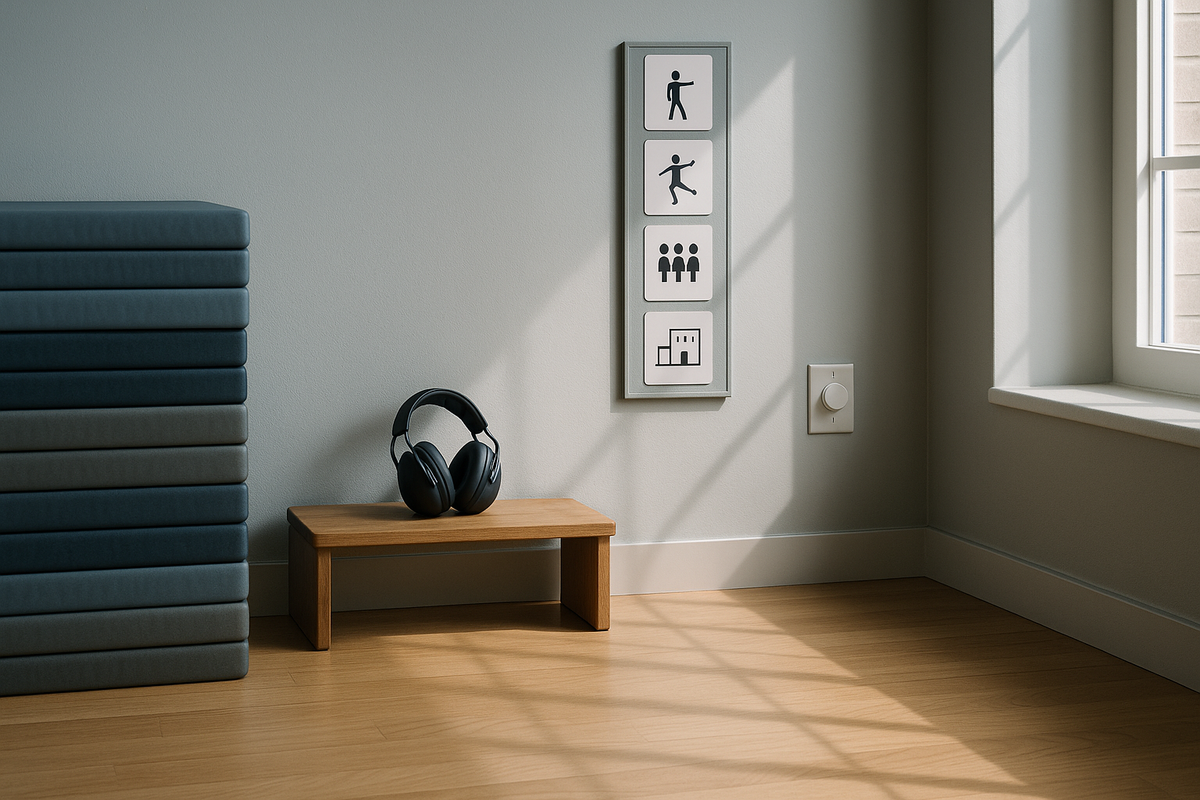
Sensory-friendly modifications are concrete and replicable. Dance Fusion Studios offers loop or noise-reducing earbuds for dancers with sound sensitivity, a designated warm-up area for breaks when overwhelmed, flexible participation during warm-ups, teachers who acknowledge stims or redirect them safely, extra support with proprioception, choice-based corrections, and predictable class structures. Parsons Dance and New York City Ballet workshops feature live piano accompaniment, designated quiet spaces, and visual schedules sent in advance so families know what to expect.
Traditional classroom rules are relaxed. Participants can enter and exit as needed, use fidget toys, dance, talk, sing, and express themselves as they feel comfortable. Lighting, music volume, and class pacing are adjusted to create calming environments. Qualified instructors trained in neurodiversity ensure they have the knowledge to provide supportive, individualized teaching approaches that build confidence and regulation.
These accommodations, once framed as special treatment, are now understood as universal design principles. Studios in 2026 increasingly integrate sensory-friendly elements into mainstream classes rather than creating separate tracks, reducing stigma and broadening appeal.
Teacher Training Has Scaled and Become Accessible
The barrier to entry has dropped significantly. More than 600 people with and without disabilities have completed DanceAbility Teacher Certification courses in various countries since 1996. The four-week, 125-hour course covers adapting teaching style to any group, working with various group sizes, and presenting performance.
Rhythm Works Integrative Dance, led by Tricia Gomez, offers live and on-demand certification workshops for dance teachers, coaches, K-12 educators, and clinical professionals. The program recommends certifying at least two lead instructors and training student buddies or assistants to build a cohesive, inclusive class environment. Frame Dance provides training to effectively teach students with ADHD, autism, and dyslexia while creating an inclusive, supportive, and adaptable learning environment.
More than 1,500 participants have attended Dance for PD workshops from 35 states and 25 countries since 2007, demonstrating global demand for adaptive dance training. Major ballet institutions including The Joffrey Ballet, Boston Ballet, and Nashville Ballet have launched structured adaptive dance programs with year-round offerings, de-risking the model for independent studio owners.
The Revenue Case: Pricing, Differentiation, and Competitive Advantage
All That Dance Seattle charges $27 per class, billed monthly, for adaptive and neurodivergent classes—pricing at or near mainstream class rates. This pricing strategy reflects the value families place on inclusive programming and avoids the discount trap that can undermine perceived quality.
Studios that once viewed inclusive offerings as charitable add-ons now recognize both the social mission and revenue potential of serving these populations year-round. Industry analysis suggests that specialty offerings such as adaptive dance, dance therapy, or performance troupes may justify further premiums by tapping niche markets. The adaptive programming revenue model aligns with broader trends in fitness and martial arts, where adaptive niches unlock revenue beyond traditional enrollment and drive higher retention economics.
In a U.S. dance studio market projected to expand just 2.3% in 2025, differentiation through underserved populations offers competitive advantage. The global dance studio market, valued at USD 22.3 billion in 2024 and expected to reach USD 42.1 billion by 2033, is driven partly by diversification of dance forms catering to a wide demographic spectrum. Sensory-friendly programming fits that growth thesis.
Partnership Models Reduce Startup Risk
Sensory Friendly Dance, in partnership with the Sacramento Kings Community Foundation, launched Sacramento's first-ever Sensory Friendly Dance Performance in 2017 at the Crest Theater. In 2018, the program secured a California Arts Council Local Impact grant and expanded to include dance classes in addition to performances hosted at the Crocker Art Museum in partnership with their Art on the Spectrum program.
Studios can also leverage certification from national organizations. KultureCity is a nonprofit that trains staff at venues and certifies venues with sensory-inclusive modifications, directing users of their app to sensory-friendly accommodations at more than 900 different venues in the United States. Partnering with established organizations provides credibility, marketing reach, and operational playbooks.
What This Means for Studio Operators
Editorial analysis, not reported fact:
Studio owners should evaluate sensory-friendly programming not as a charity project but as a strategic enrollment and retention lever. Start by identifying your market. If you serve a metro area with 100,000 residents, basic prevalence data suggests approximately 800 children under 18 with ASD alone, plus a broader population with ADHD, sensory processing differences, and other needs. Survey your current families to identify unmet needs and gauge demand.
Invest in teacher training. Certifying two lead instructors through Rhythm Works Integrative Dance or DanceAbility positions your studio to launch with confidence and credibility. Budget for minimal facility modifications—adjustable lighting, a quiet corner with fidget tools, and visual schedules cost far less than new flooring or mirrors. Pilot with a single class per week, price it competitively with your mainstream offerings, and market directly to local autism support groups, occupational therapists, and school special education coordinators.
Frame the offering as universal design rather than segregated programming. Incorporate sensory-friendly elements into existing classes where possible, normalizing accommodations for all learners. This approach reduces stigma, broadens appeal, and positions your studio as genuinely inclusive rather than running a side program.
Track retention metrics closely. The retention economics documented in martial arts and Pilates show that a 5% boost in retention can increase profitability by 25% to 95%. High-loyalty niches compound value over time, especially when families lack alternatives and become vocal advocates.
Sources & Further Reading
- IBISWorld Dance Studios Industry Report, U.S. market size, growth trends, and competitive dynamics
- Chance 2 Dance, nonprofit studio serving 1,400+ dancers with disabilities
- University of Washington study on Ballet for All Kids, retention factors for adaptive dance programs
- DanceAbility Teacher Certification, 125-hour training program for inclusive dance instruction
- Rhythm Works Integrative Dance, live and on-demand certification workshops for teachers
- Sensory Friendly Dance, Sacramento-based program with performance and class models
- How Dance Studios Are Expanding Adaptive & Inclusive Programs, revenue models and universal design strategies
Editorial coverage of publicly reported industry developments. Dance Studio Journal has no commercial relationship with any companies named.