What Happens If a Student Gets Injured at Your Dance Studio?
Liability splits based on cause, waivers have limits, and independent contractors create coverage gaps. A legal and operational playbook for studio owners.
Key Takeaways
- Liability splits based on cause: Instructors face liability for technique or supervision failures, while studio owners bear responsibility for facility defects, equipment failures, and premises hazards—making both professional liability and general liability insurance essential.
- Independent contractor exposure creates a coverage gap: If an IC's student gets injured, the studio's policy won't defend the IC, and the studio remains liable if facility conditions contributed—requiring ICs to carry their own coverage and name the studio as additional insured.
- Waivers reduce but don't eliminate risk: Liability waivers provide important protection but courts scrutinize them closely, and non-compliant contracts can be invalidated entirely, making proper drafting under state-specific dance studio laws critical.
- Documentation becomes your legal defense: Same-day incident reports including witnesses, actions taken, and parent pickup details support insurance claims and demonstrate sound risk management if disputes arise months later.
- Injury costs escalate quickly without coverage: With an average of 23,291 children receiving emergency treatment for dance injuries annually in the U.S., a single claim for medical bills, lost wages, and legal defense can exceed studio annual revenue without proper insurance.
Who Bears Legal Responsibility When a Student Gets Injured
The answer depends entirely on what caused the injury. If a student gets injured because of instruction, the instructor is liable; if the injury is due to a defect in the property, the studio is liable. This split creates distinct risk profiles that require different insurance products.
Dance instructors owe a legal obligation to ensure student safety by giving proper instruction, providing an environment free from potential hazards, and addressing potential injuries that might occur during class. Negligent actions include inadequate warm-up protocols, failing to progress students safely through skill levels, or ignoring visible hazards in the dance space. A teacher could face liability claims if their failure to properly instruct technique, spot a student attempting an advanced skill, or remove water spills results in injury.
The independent contractor model, common in boutique dance studios, creates a dangerous coverage gap. Independent contractor liability works differently than employee coverage. If an independent contractor teaching a class has a student injured during their session and is named in the lawsuit, the studio's policy will not pay out to defend the IC. The IC must pay out of pocket or need their own liability insurance. However, if the studio is named in the lawsuit, the policy will defend and settle claims if the studio is found negligent, though it will not pay out if negligence is found on behalf of the independent contractor alone.
Liability Waivers: Powerful Tools With Real Limitations
It's common for liability waivers to be included in student contracts, and these waivers usually cover dance studios and their owners for any liability for a physical injury that may occur during lessons. But the protection only holds if the waiver complies with state law requirements.
Many states have enacted dance studio-specific consumer protection laws that dictate contract terms, cancellation policies, and waiver language. If a student contract and the liability waiver within it are void because the contract does not follow the legal guidelines, the dance studio could lose a basic and effective contractual protection in the event a student suffers a catastrophic injury and sues the studio. Dance studio owners are often unaware of these laws, and their businesses could benefit from increased awareness and compliance.
Student waivers are helpful risk-management tools, but they do not replace liability insurance. Dance instructor liability insurance helps protect you even when a waiver is questioned or doesn't apply. It can provide a defense attorney, help cover settlements or judgments if you are found legally responsible, and respond to certain covered claims that waivers cannot prevent. Courts will examine waivers closely and may invalidate them when found to be unfair or overbroad.
Insurance Architecture: What Coverage You Actually Need
Most studio owners underestimate both the types and amounts of coverage required to operate safely. Dance studio insurance requirements extend beyond a single general liability policy.
Professional liability insurance covers financial losses related to the quality of your work. For example, it will pay for legal defense costs if a student claims that your negligence led to an injury. It also covers the medical costs incurred, attorney fees and court costs if a lawsuit is filed, and even lost wages for the time spent defending yourself. Without insurance, just one claim could bankrupt you professionally and personally, regardless of whether the allegations have merit.
Teaching primarily children can actually increase the chance of an incident, simply because kids are more likely to fall, collide, or get hurt while learning new skills. A sprained ankle, broken bone, or concussion can lead to medical bills and missed school or work for parents, costs they may try to recover from your studio. Most states require workers' compensation for dance studios and schools that have employees.
Insurance pricing varies widely, but industry sources report options starting around $189 to $500 per year for independent instructors; studios typically see higher premiums depending on size, location, and claims history. A $1,000,000 occurrence form general liability program provides protection for dance studios, owners, directors, instructors, and employees against claims of bodily injury liability, property damage liability, personal and advertising injury liability, and the litigation costs to defend against such claims, with no deductible for this coverage.
Facility Maintenance and Equipment Inspection as Liability Prevention
The studio floor is the most important piece of injury prevention equipment a studio owns. A sprung floor with separated panels, worn marley, or inconsistent rebound can cause joint strain or falls. Floors should be checked on a set schedule, not just when someone complains. Equipment like ballet barres, mirrors, and portable stages should also go through routine checks, since loose hardware is one of the most preventable causes of studio injury.
DIN 18032-2 and ASTM F2772 specifications measure critical factors like force reduction and energy return. These standards ensure floors absorb between 53 to 75 percent of impact. Documented compliance with these standards provides both injury prevention and evidence of due diligence if a claim arises.
Supervision ratios matter especially for studios serving younger students. Have warnings and disciplinary actions in place for those who break policy. Ensure appropriate instructor to student ratios for various age groups and skill levels. Liability and conditioning protocols should address skill readiness before allowing students to attempt advanced techniques.
Incident Documentation That Actually Protects You
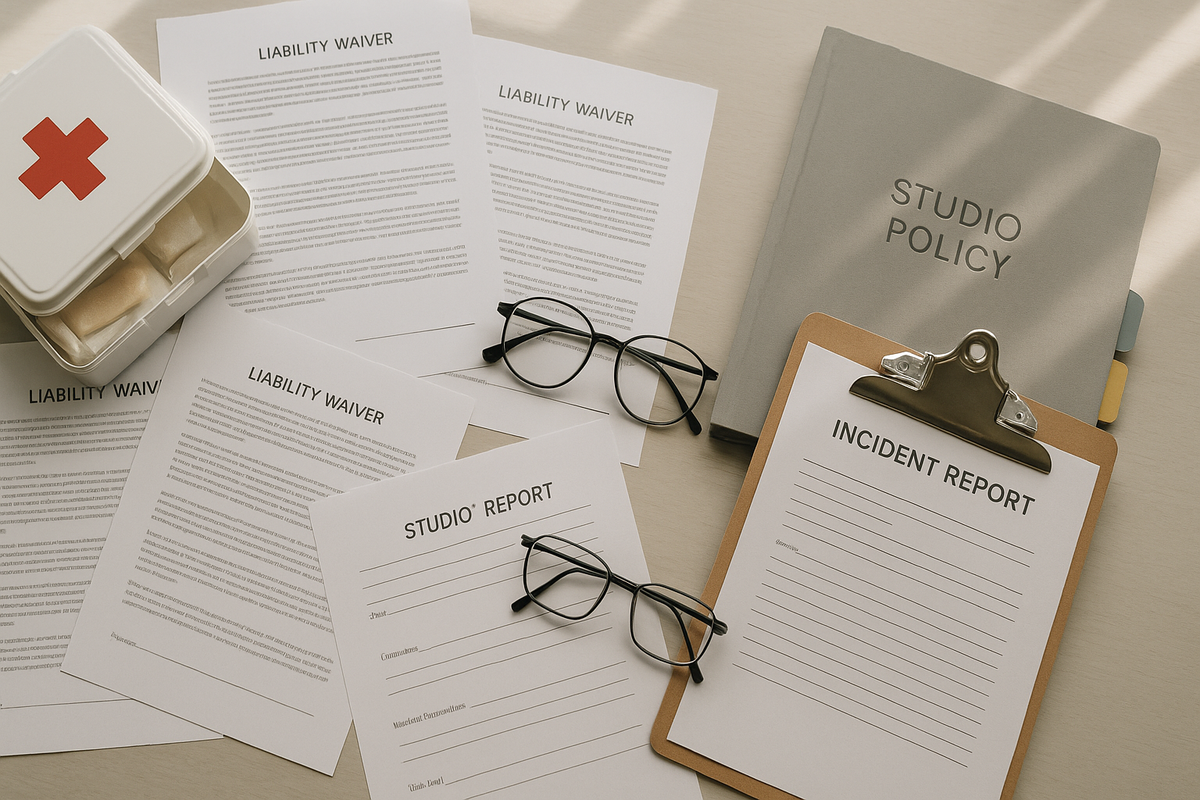
Injuries are an unfortunate fact of life in a dance studio, which is exactly why a consistent incident reporting process matters more than most owners realize. The report should include what happened, who was there, what the staff did, and any statements from witnesses. This should be filled out on the same day if at all possible.
For every urgent call, log these five items in a shared note such as Google Doc, CRM, or studio software: date and time and who called; dancer name plus class or team; what happened in one paragraph; what you promised such as call back by 7:30pm, send schedule, borrow costume; outcome as resolved, pending, or escalated. Safety incidents need a separate incident report that captures location in studio such as Studio A corner, lobby, parking lot; witnesses including staff and parents; action taken such as ice, called guardian, 911; and parent pickup time and who picked up the student.
Studios that take this habit seriously find it easier to work with their insurer and have a better record if a dispute arises later. Consistent documentation and defense protocols also help support the claims process and demonstrate sound risk management practices to underwriters, often resulting in better renewal terms.
It's important that everyone understand their role in an emergency. Establish clear expectations for each person, from the front desk staff to the students, to handle the situation. For example, if someone needs emergency assistance, who is responsible for calling 911 and who will let emergency medical services in the building? This is what is called the "choreography of an emergency."
The Industry Shift From Prevention to Risk Management
Injury risk management goes beyond mere injury prevention. It acknowledges that injuries are an inherent part of any physical activity, including dance. However, the goal is to mitigate the risks and ensure that dancers receive the appropriate care and support when injuries do occur. The shift from injury prevention to risk management is a recent development in dance medicine and science.
Professional Teaching Standards for Dance Arts require instructors to instruct all students in the prevention and care of dance injuries. Prioritizing safety requires fostering an environment where open communication is encouraged. Dancers should feel comfortable discussing discomfort, pain, or concerns about their physical well-being without fear of retribution. Studio owners and teachers must make it clear that dancers' well-being comes first.
Encourage dancers to communicate any discomfort or pain they might be experiencing, even if it seems minor. When dancers know they can speak up without consequences, it empowers them to take control of their health. Developing relationships with physical therapists, athletic trainers, and strength and conditioning specialists is invaluable for both injury care and demonstrating a comprehensive approach to dancer safety.
What This Means for Studio Operators
Editorial analysis, not reported fact:
The liability landscape for dance studios in 2026 rewards proactive operators and punishes those who treat insurance as an afterthought. Studios operating with generic fitness policies, outdated waivers drafted before state-specific dance laws took effect, or no independent contractor insurance requirements are one parent complaint away from discovering their coverage gaps. The studios that weather claims successfully share three operational habits: they document every incident the same day with witness statements and photographs, they require independent contractors to carry their own professional liability coverage and name the studio as additional insured, and they schedule quarterly facility inspections rather than waiting for visible damage.
The return on investment for solid risk management extends beyond claims defense. Studios with documented safety protocols, floor maintenance schedules aligned with DIN 18032-2 and ASTM F2772 standards, and clear emergency response roles see lower insurance premiums at renewal, fewer parent disputes that escalate to legal threats, and stronger enrollment retention when families perceive the studio as professionally managed. For studios on tight margins, a single avoided claim pays for years of proper insurance coverage. For competitive studios pushing advanced skills, the combination of technique progression documentation and referral relationships with sports medicine providers creates both injury prevention and legal defense infrastructure.
The shift from prevention language to risk management language reflects a maturation of the industry. Acknowledging that injuries will occur, then building systems to manage them well, positions studios as partners in dancer development rather than just vendors hoping to avoid lawsuits. That cultural shift, combined with compliance on the technical insurance and waiver requirements, gives studio operators both legal protection and competitive differentiation in markets where parents increasingly research safety track records before enrollment.
Sources & Further Reading
- Apolla Performance on injury risk management in dance studios, covering the industry shift from prevention to comprehensive risk management frameworks
- Bautista LeRoy on legal rights and remedies in dance injuries, explaining when instructors versus studio owners bear liability
- Dance Teacher magazine on state-specific dance studio laws, cataloging consumer protection requirements that affect contract enforceability
- Endurance Flooring on DIN 18032-2 and ASTM F2772 standards, detailing technical specifications for impact absorption and facility safety
- Insureon on dance studio insurance pricing, providing independent instructor and studio premium ranges
- K&K Insurance on dance instructor liability coverage, outlining professional liability and medical expense protection
- National Dance Education Organization Professional Teaching Standards, establishing injury prevention and care education requirements for instructors
- Sadler Sports and Recreation Insurance on instructor liability gaps, explaining why waivers don't replace insurance coverage
- Skip Calls on emergency protocol documentation, providing incident logging templates and emergency choreography frameworks
Editorial coverage of publicly reported industry developments. Dance Studio Journal has no commercial relationship with any companies named.