Recital Flowers, Gifts & Concessions: Small Revenue Streams
Flowers deliver 30-50% margins, merchandise bundles boost ticket value, and concessions hit 70-90% profits—here's how to organize all three with pre-orders and software.
Key Takeaways
- Recital flowers deliver 30-50% profit margins when studios buy wholesale and use pre-orders to avoid inventory waste, with vendors like 48 Longstems offering bouquets starting at $10 per bundle.
- Merchandise bundles increase average ticket value significantly—Rhythm Dance Center's $120 "fundle" combines tickets, video downloads, and branded apparel in a single purchase.
- Concessions generate 70-90% profit margins on high-volume items, with popcorn at 90% and cotton candy at 87-94% leading the category.
- Pre-orders reduce risk and improve cash flow—TuTuTix reports that studios using pre-order systems for flowers and merchandise avoid over-buying while capturing early revenue.
- Software platforms streamline bundling and reporting, with ticketing systems like Studio Pro and Dance Recital Ticketing enabling one-click purchases of tickets plus merchandise, flowers, and digital products.
- Recital ticket sales represent 8% of annual youth studio revenue according to industry data, but flowers, merchandise, and concessions can add 15-25% on top of ticket income when organized strategically.
Why These Revenue Streams Matter Now
The average dance student generates $1,200 in annual revenue through tuition, costumes, recital tickets, and merchandise. Yet many studio owners treat recital day as a logistical challenge rather than a revenue opportunity. As costs creep and parent budgets tighten in 2025-26, ancillary revenue streams become more critical.
Flowers, gifts, and concessions are low-risk, high-margin add-ons that require minimal overhead when organized with pre-orders and vendor partnerships. Studios that systemize these three categories capture impulse purchases and advance orders that would otherwise go to grocery stores and florists. The operational playbooks are mature enough that any studio can implement them with 2-3 months of planning.
Recital Flowers: 30-50% Margins Through Pre-Orders
Selling recital bouquets delivers profit margins of 30%, 40%, or even 50% when studios buy wholesale. TuTuTix recommends marking up quality bouquets from $10 wholesale to $20 retail, optimizing profits while keeping prices accessible to families.
48 Longstems, the largest provider of recital flowers in the dance industry, contracts directly with flower farms to offer wholesale pricing. Their ready-made bouquets come in Princess, Ballerina, and Broadway packages with 4-130 bouquets per box. Studios should contact vendors 1-2 months in advance to secure pricing, as waiting until the last minute limits quote options.
Pre-Orders Eliminate Guesswork
Rhythm Dance Center in Marietta, Georgia uses pre-orders rather than guessing demand and risking over-buying. Best practice is to send a parent survey to estimate demand and price point before ordering. As one studio operator noted, the first year of selling flowers is typically the hardest—educating parents that they can purchase bouquets at the recital rather than at a florist makes a measurable difference in subsequent years.
Studios should err on the conservative side with initial orders. It's better to sell out than to have 20 extra bouquets wasting money. For studios wary of inventory risk, a profit-sharing agreement with a local florist allows the vendor to sell on-site while splitting proceeds, eliminating upfront investment entirely.
Merchandise Bundles: The $120 Ticket Upgrade
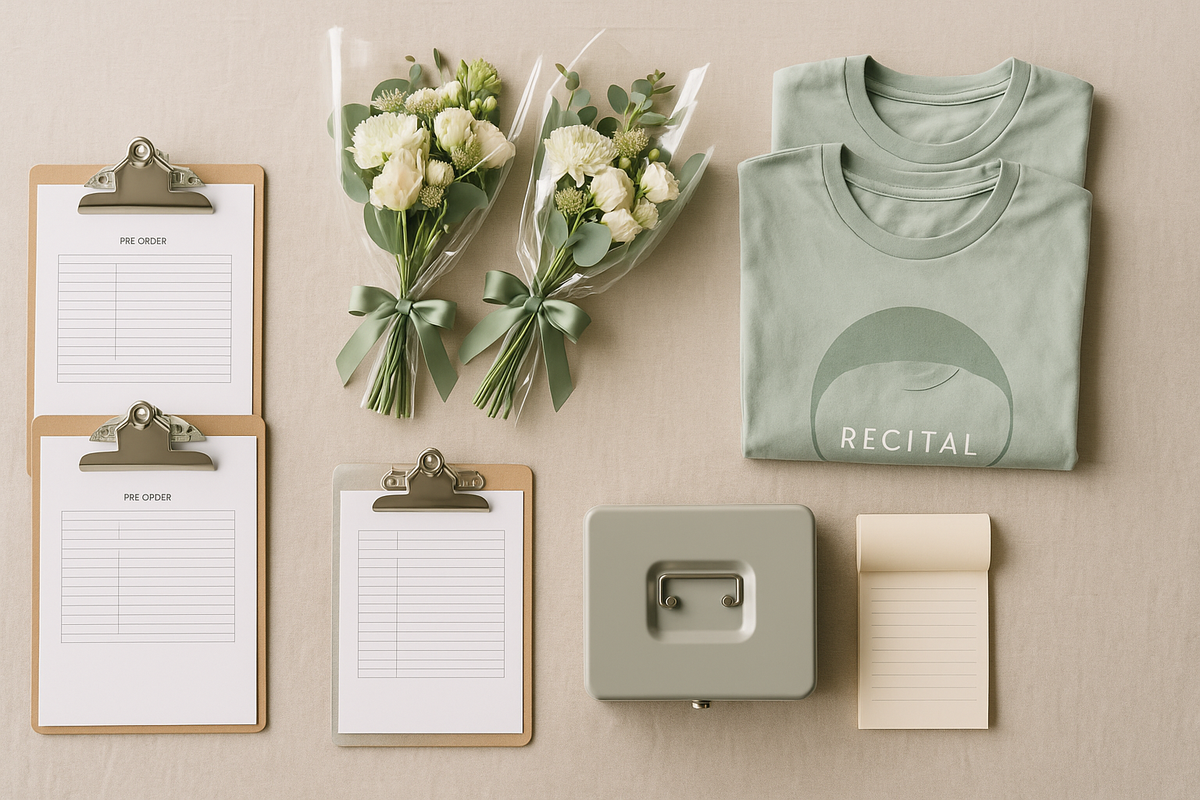
Merchandise has evolved from an afterthought to a cornerstone of recital revenue. Rhythm Dance Center coined the term "fundle"—a $120 bundle including two performance tickets, digital video download, class photo, and studio apparel. Bundling items with tickets presells merchandise online and captures grandparents ordering multiple sizes when they see ultra-cute t-shirts.
Branded recital t-shirts with every dancer's name on the back are the biggest seller, followed by custom sweatshirts, duffle bags, jewelry, notebooks, and accessories. For an extra fee, studios offer personalized items that commemorate the occasion or send a special message. This approach mirrors how successful fitness studios use retail products to increase average revenue per member.
Ordering Timeline and Software Integration
Limelight Teamwear recommends designing and ordering custom merchandise 4-6 months before the recital, whether placing a bulk order or running a Team Shop for parent pre-orders. Studios should open their Team Shop at least 12-14 weeks before recital week to give parents ample time, then close by listed deadlines to ensure timely delivery.
Ticketing platforms like Dance Recital Ticketing allow buyers to purchase DVDs, flowers, t-shirts, and trophies in the same transaction, keeping reporting in one place. Modern studio management systems track merchandise inventory, automate pre-order fulfillment, and generate post-event reports comparing registrations, ticket income, refunds, and merchandise sales.
Concessions: 70-90% Margins on Classic Items
Concessions are often the highest-margin revenue source at recitals. In dance, high school, and community events, profit margins of 70 to 80 percent are common on concession items. Classic offerings—popcorn, nachos and cheese, hot dogs, soft pretzels, candy, cotton candy, sno-cones, pizza slices, chips, and cold drinks—dominate every successful stand because of familiar cravings, fast service, and exceptional margins.
Popcorn typically leads, with margins exceeding 90% since a serving costs pennies in kernels and oil. Cotton candy delivers 87 to 94 percent profit margins, costing around 13 cents per serving and retailing between $1 and $2.50. Beverages are among the highest-margin items, with very low cost per serving and consistently high demand across nearly every guest visit.
Fundraiser Context
Many dance studios frame concessions as fundraisers for specific productions or travel. Popcorn fundraisers offer 30-50% profit margins with gourmet flavors, no upfront cost, and free shipping. Teams promote sales during rehearsals, recital weekends, or parent meetings, then expand reach online through family and studio networks. This approach turns concessions into a parent engagement tool while generating revenue.
Organizational Best Practices
Successful studios follow a consistent timeline. Six to eight months out, finalize merchandise design. Four to six months out, contact vendors for quotes. Two to three months out, open pre-orders for gear, flowers, and digital products. One to two months before, lock in final counts. Two to three weeks before recital, schedule volunteers for ushering, merchandise, flowers, and ticket scanning. Forty-eight to seventy-two hours before the show, prepare a cash float for merch and flowers.
Demand forecasting matters. Come up with an informed estimate rather than picking a random number. Survey parents about preferred price points and quantities. For first-time programs, err on the conservative side—it's better to sell out than to have inventory left over. Post-event reports should compare which arrangements worked and where expenses exceeded expectations, building a database for future planning.
What This Means for Studio Operators
Editorial analysis, not reported fact:
The studios leaving money on the table are those treating flowers, merchandise, and concessions as day-of scrambles rather than revenue systems. The math is compelling: a 50-student recital with half of families buying a $20 bouquet generates $500 in profit at 50% margin. Add a $120 merchandise bundle adopted by 30% of families, and that's another $1,800. Concessions with 70% margins on 200 guests at $5 average spend delivers $700. Altogether, these three streams can add $3,000 or more on a single recital day with minimal incremental labor when organized through pre-orders and software.
The operational lift is front-loaded. Studios that design merchandise 4-6 months out, open pre-orders 12-14 weeks before, and lock vendor contracts 1-2 months in advance eliminate most day-of stress. Ticketing platforms that bundle flowers, t-shirts, and videos in the checkout flow capture impulse purchases that would never convert through separate transactions. For studios tracking every dollar in 2026, these systems pay for themselves within a single season.
The first year is always the hardest. Parents need education that flowers and merch are available on-site, and studios need baseline data on demand. But by year two, pre-order rates climb, inventory forecasting improves, and these revenue streams become predictable line items rather than pleasant surprises. In an industry where recital ticket sales represent 8% of annual revenue, capturing an additional 15-25% through flowers, gifts, and concessions is a meaningful buffer against rising costs.
Sources & Further Reading
- 48 Longstems Recital Flowers, wholesale bouquet packages for dance studios
- TuTuTix Guide to Selling Dance Recital Flowers, pre-order strategies and profit margin benchmarks
- Dance Teacher: 6 Ideas to Boost Your Recital's Revenue Potential, Rhythm Dance Center case study on merchandise bundles
- Studio Pro: Dance Recital Ticketing, software integration for merchandise and ticket bundling
- BMI Leisure: Concession Stand Foods, profit margin data on popcorn, cotton candy, and beverages
- Limelight Teamwear: Mastering Your Recital Timeline, merchandise ordering timeline and Team Shop best practices
- Dance Studio Industry Statistics, revenue composition and recital income benchmarks
- Ensemble Schools: State of the Dance Studio Industry 2025-26, cost pressures and diversified revenue trends
Editorial coverage of publicly reported industry developments. Dance Studio Journal has no commercial relationship with any companies named.