Online & Hybrid Revenue Models for Dance Studios in 2026
47% of studios now offer hybrid memberships combining in-person and virtual access. How digital content, flexible pricing, and social discovery are reshaping studio revenue in 2026.
Key Takeaways
- Hybrid memberships now dominate studio growth: 47% of U.S. dance studios offer combined online and in-person access in 2026, with virtual-only tiers typically priced around $60/month versus $80/month for in-person classes.
- The online dance training market reached $3.48 billion in 2026, with 62% of learners attending at least one online class weekly, up from 35% in 2020, proving digital access is a permanent mainstream expectation.
- Social discovery replaces word of mouth: 78% of students now find studios through Instagram, TikTok, or YouTube, with studios posting three or more TikToks weekly reporting 35% higher brand awareness among young adults.
- Flexible pricing models drive adult enrollment gains: Class packs, tiered memberships, and drop-in rates lower barriers to entry, with tiered pricing increasing average revenue per student by 15-25% as students opt up for more value.
- Instructor monetization extends beyond the studio: Virtual coaching, digital choreography packs, and subscription tutorials let teachers earn directly from loyal followers via Zoom lessons, Patreon, YouTube memberships, and dance-specific marketplaces.
- Pure digital subscription studios can achieve contribution margins above 50%, while hybrid models typically range 30-50%, making scalable membership volume and controlled fixed overhead essential for profitability.
Why hybrid revenue models shifted from emergency response to permanent strategy
The U.S. dance studio industry comprises 14,622 businesses and grew at a 2.0% compound annual rate between 2020 and 2025, with revenue expanding 2.3% in 2025 alone. In 2026, the studios reporting the fastest growth offer in-person classes as the core experience, supplemented by on-demand video libraries and occasional livestream options. This is not a pandemic remnant: 62% of learners now attend at least one online dance class per week, compared to 35% in 2020.
The online dance training market hit $3.48 billion in 2026, and studio owners face a clear strategic decision: build sustainable digital income streams or cede revenue to platforms like STEEZY, CLI Studios, and DancePlug that already serve remote learners. Meanwhile, 54% of participants view dance training as a fitness alternative rather than purely performance training, creating new crossover opportunities with wellness and corporate programming.
How flexible pricing structures lower barriers and increase revenue per student
Studios are replacing traditional fixed-tuition models with class packs, tiered memberships, and drop-in rates to serve adult students and families testing new styles. These structures are especially critical for adult programming and summer sessions, allowing prospective students to commit financially only after experiencing the teaching quality and studio culture.
Common flexible pricing models include:
- Class packs: Buy 5 or 10 classes at a slight discount, popular with adult students and families exploring a new style before committing to monthly tuition.
- Tiered memberships: Unlimited classes at a premium rate, or a set number per month at a lower rate, giving families options that fit their schedule and budget.
- Drop-in rates: Essential for removing the commitment barrier for new students, particularly adults with unpredictable work schedules.
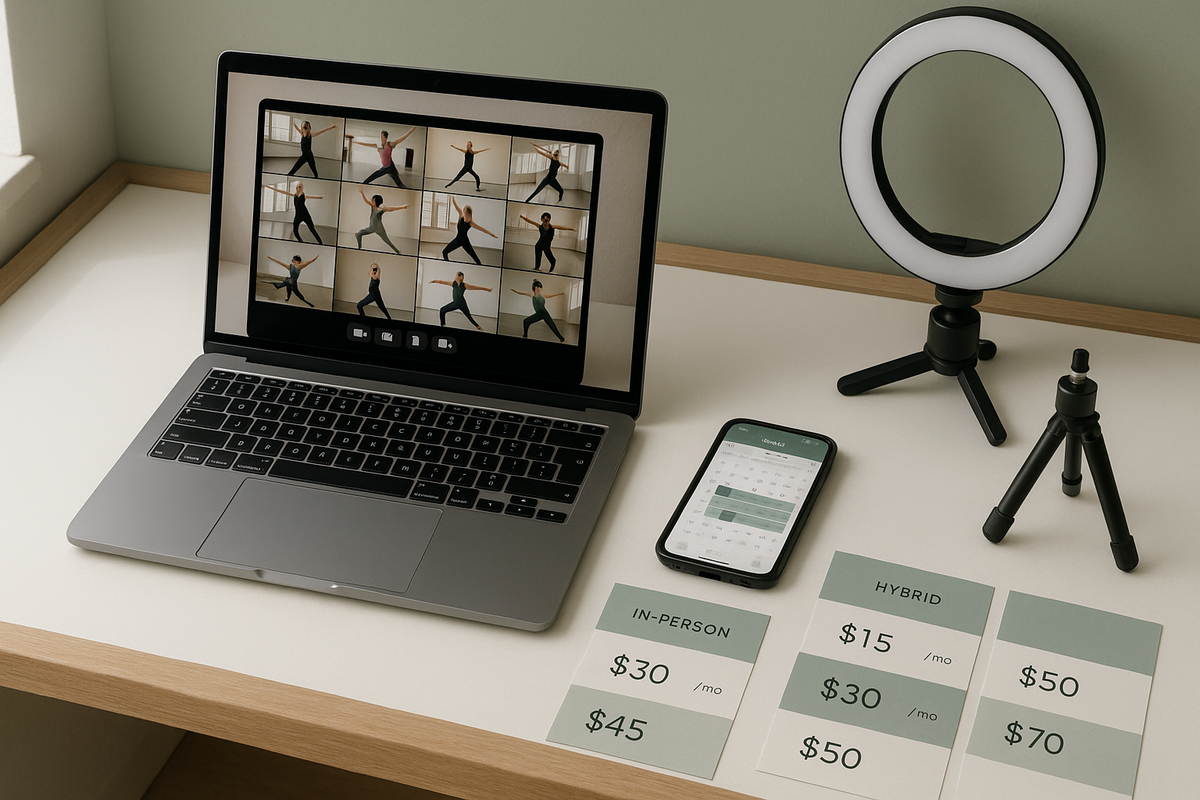
A tiered pricing structure can increase average revenue per student by 15-25%, as students often opt for the next tier up to gain more value. Virtual-only memberships typically price at a slight discount, for example $60/month versus $80/month for in-person access, while hybrid tiers combine both for a premium.
Membership tiers that balance digital access and in-studio experience
In 2026, 47% of studios now offer hybrid memberships combining online and in-person access. This model meets the needs of both local learners who occasionally travel or fall ill and remote learners who live beyond commuting distance. Flexibility is particularly attractive to working professionals and parents juggling childcare and remote work schedules.
The fastest-growing studios structure their digital offerings as complements, not substitutes, to in-person training. On-demand choreography review videos help students practice at home between technique classes. Livestream options serve students who miss a scheduled class due to illness or travel. Exclusive behind-the-scenes content, instructor Q&A sessions, and early access to recital choreography add perceived value to premium hybrid tiers.
Pure digital subscription studios can target contribution margins above 50%, according to industry financial benchmarks, while hybrid studios balancing in-person overhead with streaming revenue typically achieve margins between 30-50%. Scaling membership volume while keeping fixed overhead stable remains the key lever for profitability.
Social platforms as primary student acquisition channels in 2026
Word of mouth is no longer the dominant discovery mechanism. 78% of students say they discovered their studio through Instagram, TikTok, or YouTube. Short, engaging content such as reels, challenges, and student spotlights proves especially effective. Studios posting three or more TikToks weekly report 35% higher brand awareness among young adults.
TikTok's algorithm rewards frequent and creative posting, and dance content thrives on the platform because of its performance-oriented nature. Viral trends give even small studios a chance at national or global visibility. Instructors who tag local hashtags, participate in trending sounds, and feature student transformations see the highest engagement and conversion to trial classes.
Content strategy now drives enrollment as much as location and tuition pricing. Studios that treat Instagram, TikTok, and YouTube as enrollment funnels, posting consistently and responding to comments quickly, outpace competitors relying solely on Google search and referrals.
Instructor monetization beyond the studio payroll
Dance instructors are building independent revenue streams through virtual coaching, digital product sales, and creator platforms. Personalized coaching, which remains a gap in mass-market virtual dance training, commands higher price points than group classes. Options include Zoom private lessons, small-group technique sessions, and corporate wellness dance classes for remote teams.
Digital marketplaces allow instructors to sell dance tutorial videos, choreography packs, practice routines, and beginner guides. Subscription platforms such as Patreon, YouTube memberships, and OnlyFans (used for non-explicit artistic content) let creators earn directly from their most loyal supporters. Recurring revenue models offer financial stability compared to per-class pay.
A new monetization layer is emerging around viral choreography. Dance royalties are recurring payments generated every time someone participates in a creator's dance template, without the creator needing to post new content. On platforms like SnapDance, creators retain ownership of original choreography, with earnings dependent on engagement and how many users generate videos using the template.
Tech infrastructure and billing platforms supporting hybrid models
Hybrid revenue models require robust software to manage in-person scheduling, virtual class delivery, membership billing, and student communication in one system. All-in-one platforms designed for studios include Mindbody, Jackrabbit, Spark Membership, Wellness Living, Enrollsy, and newer dance-specific entrants like Swyvel.
High-quality content capture and digital product delivery demand investment in cameras, microphones, mixers, encoders, and bandwidth. Studios planning to scale concurrent live classes or license content in 2027 should budget for higher production spend upfront to maintain competitive video and audio quality.
Payment flexibility is critical. Studios should offer autopay for recurring memberships, one-time purchase options for class packs, and integrated invoicing for private lessons. The smoother the billing experience, the lower the administrative friction and the higher the renewal rate.
Corporate wellness and fitness crossover opportunities
The convergence of dance, fitness, and wellness opens new revenue channels. 54% of participants view dance training as a fitness alternative, not just performance preparation. Zumba, hip-hop cardio, barre fusion, and rhythm-based conditioning classes dominate this crossover space, appealing to adults seeking movement-based stress relief and social connection.
Remote work has enabled daytime and early evening class attendance that previously went unfilled. Studios report surging adult enrollment as students seek creative outlets and in-person community after years of isolation. Corporate wellness contracts, offering lunchtime or after-work virtual dance sessions to remote teams, represent an underexploited B2B revenue stream.
What This Means for Dance Studio Owners
Editorial analysis — not reported fact:
Studio owners in 2026 must treat digital revenue as a permanent pillar, not a temporary add-on. The clearest path forward is a hybrid model: in-person classes as the premium core experience, with on-demand libraries and occasional livestreams extending reach and generating recurring revenue from students who cannot attend every week. Virtual-only tiers priced 20-25% below in-person memberships attract remote learners and traveling families while protecting the perceived value of in-studio training.
Flexible pricing lowers the barrier for adult students and testing families, but tiered structures also drive higher average revenue per student when designed well. Offering three membership levels, unlimited drop-ins, and class packs covers the full spectrum from casual participants to serious pre-professional students.
Social content is now the top of your enrollment funnel. Studios that post three or more short videos weekly, engage authentically with comments, and feature real student progress will outpace competitors still relying on static websites and referral-only growth. Assign content creation as a formal responsibility, whether to a staff member, a student intern, or an outside contractor.
Instructor monetization outside your payroll is not a threat; it is a retention and recruitment tool. Teachers who earn supplemental income from private virtual lessons, choreography sales, or creator platforms are more financially stable and less likely to leave for higher-paying opportunities. Consider offering studio support, such as filming space, lighting, or administrative help, in exchange for exclusive first rights to their digital content for your member library.
Finally, choose your tech stack carefully. A disjointed mix of separate billing, scheduling, video hosting, and communication tools creates administrative drag and a poor student experience. Invest in an all-in-one platform built for studios, and budget for production quality that matches or exceeds the free content students see on YouTube and TikTok.
Sources & Further Reading
- IBISWorld U.S. Dance Studios Industry Report — market size, growth rates, and business count data for 2020-2025
- Statista Online Dance Class Participation Statistics — learner participation trends from 2020 to 2025
- Research and Markets Dance Fitness Market Analysis — fitness crossover trends and participant motivations
- Dancepreneur Pricing Strategies Guide — tiered pricing impact on revenue per student
- Dance Studio Software Hybrid Model Adoption Report — hybrid membership adoption rates in 2026
- Social Media Today Dance Studio Marketing Insights — social discovery and platform performance data
- TikTok Marketing Analytics Dance Content Performance — posting frequency and brand awareness correlation
- Dance Royalties Creator Economics Explainer — emerging choreography monetization models
- Mindbody — all-in-one studio management and billing platform
- Jackrabbit — dance-specific class management and payment software
Editorial coverage of publicly reported industry developments. Dance Studio Journal has no commercial relationship with any companies, studios, competitions, conventions, or organizations named.