Effective Cueing, Corrections & Curriculum Design in 2026
How anatomically informed feedback, progressive curriculum frameworks, and neurodivergent-inclusive teaching are reshaping dance instruction for today's students.
Key Takeaways
- Curriculum design frameworks are becoming more formalized in 2026, with programs like Ballet West Academy's Curriculum Design Seminar offering studio directors evidence-based scaffolds that integrate childhood development science with progressive skill sequencing.
- Constructive feedback focused on what dancers should do ("Draw your shoulder blades down") creates new neuromuscular patterning more effectively than corrections focused on what not to do ("Don't lift your shoulders").
- Anatomically informed cueing is now considered essential to safe teaching, with common corrections like "pull the shoulders down" or "flatten the back" increasingly recognized as biomechanically flawed and injury risks.
- Imagery-based cues such as "Slide your shoulder blades down your back like you are trying to put them into your back pockets" help dancers internalize sensation over form, making feedback more accessible across learning styles.
- Five-part lesson plans that alternate teacher-directed and student-centered work provide the structure and repetition needed for deep learning while maintaining engagement through varied dance concepts.
- Neurodivergent inclusion requires concrete environmental modifications, including limiting sensory inputs in the studio to provide fewer distractions during dance engagement.
Why curriculum design and cueing methodology matter more in 2026
Dance instruction is undergoing a significant pedagogical shift as contemporary research and evolving student expectations converge around feedback sensitivity, anatomical accuracy, and neurodivergent inclusion. Traditional correction methods that worked for decades are increasingly recognized as biomechanically problematic and psychologically ineffective for today's dancers.
According to Ballet West Academy's Curriculum Design Seminar, which began in 2025 with 10 participating schools and is expanding in 2026 with live virtual and in-person sessions, studio directors and educators now have access to formalized tools for crafting training programs tailored to specific communities. Ballet West's curriculum integrates top-notch ballet training with the science of childhood development, focusing on physical, cognitive, and emotional needs from early childhood through pre-professional training.
Research from 2016 to 2021 identified pedagogy as the research hotspot in online dance teaching, with online teaching models gradually developing into more effective and contextually appropriate approaches. The convergence of neuroscience research, student mental health awareness, and digital-era pedagogy makes this moment critical for studios to rethink how they structure classes, deliver feedback, and design long-term skill progressions.
Building progressive, learner-centered curricula with SMART goals
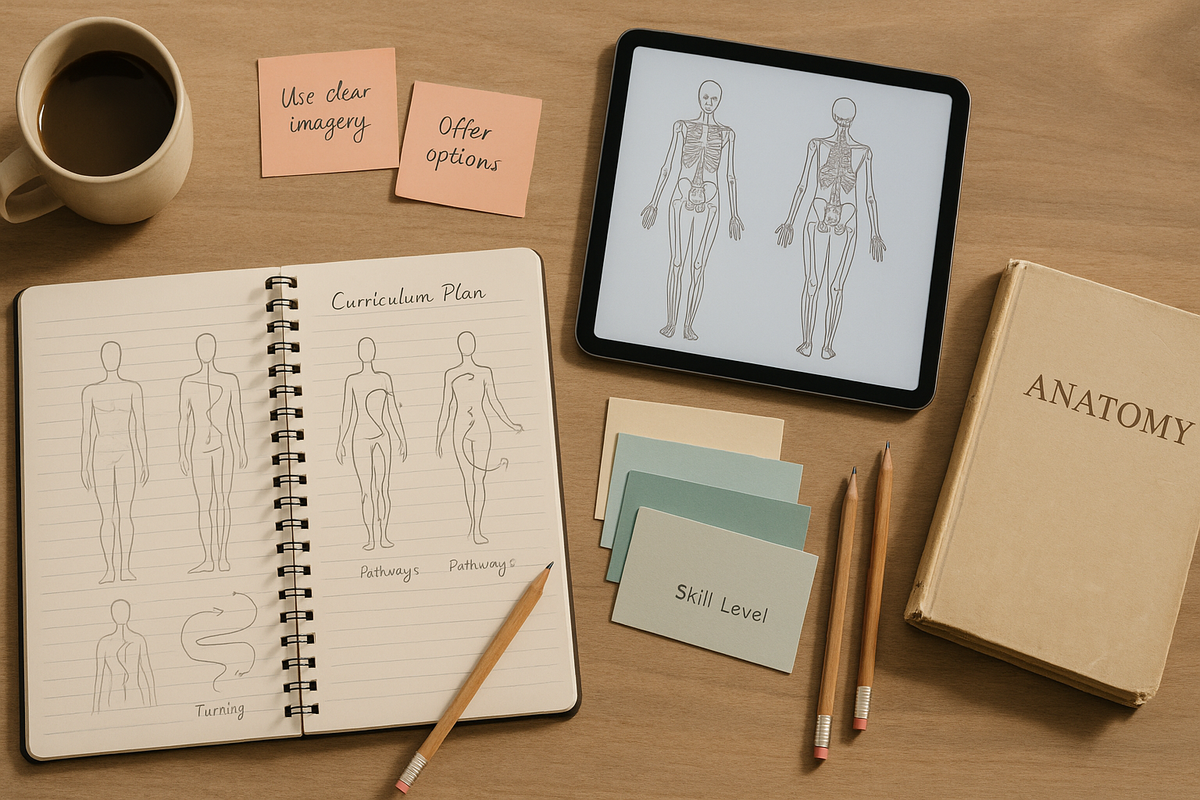
Dance education thrives on progressive learning, where each lesson builds upon previously mastered concepts. A structured dance syllabus provides a clear roadmap, ensuring students develop technical skills in a logical and effective sequence. The SMART goal framework (Specific, Measurable, Attainable, Relevant, and Time-Bound) is now recommended for curriculum building, ensuring realistic, achievable learning outcomes.
Platforms like Dance: The Cutting Edge provide video-based, accredited curricula with 4,000+ tutorial videos covering step-by-step breakdowns, teaching tips, front and back views, and slow-motion demonstrations of dance techniques and choreography across all levels and styles. These ready-made scaffolds offer studios a foundation for evidence-based progression and intentional learning sequencing.
Dance lesson planning should start by looking at learning goals for the entire year. To keep students progressing, teachers need to think ahead and ask: "Where do you want your students to be at the end of your dance season?" A lesson plan should always have a specific objective or learning goal, whether that's mastering a single movement like a grand jeté or something broader like musicality and spatial awareness. Without a structured lesson plan, it's easy for classes to become unbalanced, spending too much time on certain exercises while neglecting others. A well-crafted plan ensures all essential elements including barre work, center practice, across-the-floor exercises, and artistic development receive adequate focus.
The science of effective cueing: Moving from visual to sensation-based instruction
In group fitness settings, a cue is defined as any information, reminder, or alert provided by the instructor to help participants properly perform a movement. Cues can be verbal, nonverbal, or tactile, with three main categories: performance cues, safety cues, and alerting cues. While vocal cueing is vital to master in classes, visual cueing or non-verbal cueing can be thought of as showing the class, such as breaking down dance steps as you're doing them.
Using imagery involves creating mental images for participants with vivid descriptions. For example, when instructing a squat, you can say, "Imagine you're sitting back into a chair," or for downdog, "Slide your shoulder blades down your back like you are trying to put them into your back pockets." Before offering a correction, asking a concrete and sensation-based question like "Where does your weight travel?" or "How are you stabilizing?" uses biomechanical cueing to reorient dancers to sensation over form.
Teachers should try layering cues like "Fold, swing, and…" instead of just "5, 6, and…" to embed musicality with qualitative information, giving dancers both timing and intention to help them embody the phrase rather than just execute it. If you give a correction pre-combination, such as "Focus on initiating the dégagé with the heel," dancers are more likely to be actively improving their technique by thinking specifically.
Why common corrections are anatomically flawed and how to fix them
Common corrections like "pull the shoulders down," which leads to misplacement of the scapulae, or "flatten the back," are deeply flawed and can lead to students working in incorrect alignment, setting them up for injury. Learning about basic functional anatomy is the most important thing dance teachers can do to begin giving safer, more effective corrections.
When using corrections, teachers concentrate on what the dancer is doing "wrong." For example, saying "don't lift your shoulders" brings attention to the unwanted action. In contrast, constructive feedback like "Draw your shoulder blades down your back," "find space between your shoulders and the earlobes," or "let the shoulder blades expand like wings" develops new neuromuscular patterning and helps dancers avoid lifting their shoulders.
The best teachers are not only ones who give lots of corrections, but give corrections relevant to dance as a whole. Feedback serves three important functions: as information to direct error correction, as reinforcement, and as motivation. Feedback to direct error correction should be both prompt and specific.
Navigating feedback sensitivity with today's dance students
Many dance teachers find that giving feedback—corrections, constructive criticism, and even compliments—can be difficult with today's students. Some students get noticeably upset when corrected and do not seem able to handle the idea of not doing something "right," or misinterpret feedback as an attack rather than the instructor's belief in their abilities.
The Sandwich Method, beginning and ending with something positive while placing the constructive criticism in the middle, can help dancers who struggle with receiving feedback. This approach acknowledges student effort and growth while still addressing technical needs, creating a psychologically safer environment for learning.
Structuring class time for deep learning and skill retention
A five-part lesson plan alternates teacher-directed work with student-centered work for deep learning. The plan provides the structure and repetition that allow students to feel safe and secure while engaging their attention through the novelty of various dance concepts. This balance between predictability and novelty is critical for maintaining engagement across a full season.
The five-part structure ensures all essential elements receive adequate focus, preventing the common trap of spending too much time on certain exercises while neglecting others. This systematic approach to class structure supports both immediate skill acquisition and long-term retention.
Teaching neurodivergent learners: Environmental modifications that support inclusion
One recommendation for instructors to facilitate dancing with neurodiversity is to limit the sensory inputs in the dance studio or class. These modifications include changes to the environment that provide students with fewer distractions and sensory experiences while they engage in dance.
Concrete environmental modifications might include dimming overhead lights, reducing background noise, offering visual schedules, providing clear spatial boundaries, and allowing for sensory breaks. These adjustments create a more accessible learning environment for neurodivergent students while often benefiting neurotypical learners as well.
What This Means for Dance Studio Owners
Editorial analysis — not reported fact:
The shift toward evidence-based, anatomically informed teaching is not optional for studios that want to remain competitive and safe in 2026. Investing in teacher training around functional anatomy and constructive feedback methodology protects both your students and your liability exposure. Studios that continue relying on traditional "don't" corrections risk not only student injury but also retention problems as dancers increasingly expect psychologically safe, scientifically grounded instruction.
Formalizing your curriculum using frameworks like SMART goals and progressive skill sequencing positions your studio as a serious educational institution rather than a recreational drop-in program. This distinction matters for parent perception, tuition justification, and student outcomes. Consider whether your current lesson planning ensures balanced coverage of technique, artistry, and physical development, or whether you're defaulting to the same exercises because they're familiar.
For studios with limited budgets for curriculum development, platforms like Dance: The Cutting Edge offer ready-made scaffolds that can be adapted to your community's needs. For those with more resources, programs like Ballet West Academy's Curriculum Design Seminar provide collaborative professional development that builds internal capacity for ongoing curriculum refinement.
Finally, environmental modifications for neurodivergent learners are low-cost, high-impact changes that expand your addressable market while improving the learning environment for all students. Sensory-aware studio design is becoming an expected baseline, not a specialty accommodation.
Sources & Further Reading
- Ballet West Academy Curriculum Design Seminar — live virtual and in-person sessions for studio directors and educators on evidence-based curriculum frameworks integrating childhood development science
- Dance: The Cutting Edge — video-based, accredited curricula with 4,000+ tutorial videos covering step-by-step breakdowns across all levels and styles
- International Association for Dance Medicine & Science — resources on functional anatomy, biomechanics, and injury prevention for dance educators
- National Dance Education Organization — lesson planning frameworks, pedagogical research, and professional development for dance teachers
- Dance Teacher magazine — ongoing coverage of cueing methodology, feedback strategies, and inclusive teaching practices
- Dance Magazine — reporting on neurodivergent inclusion, online pedagogy trends, and contemporary teaching research
Editorial coverage of publicly reported industry developments. Dance Studio Journal has no commercial relationship with any companies, studios, competitions, conventions, or organizations named.