Building Private Lesson Programs for Competition Dancers
Competition-track private lessons generate $500-$1,000+ per solo through choreography, coaching, and cleanings. How studios structure pricing, staffing, and expectations.
Key Takeaways
- Private lesson pricing: Competition-track studios charge $75 to $150 per hour for private coaching, with solo choreography packages ranging from $350 to $1,500 depending on instructor credentials and bundled services such as music editing and performance showcase access.
- Revenue multiplier: A single competition solo generates $500 to $1,000+ per dancer through choreography fees, technique cleanings, and private coaching sessions, layered on top of group tuition without requiring additional studio space.
- Staffing retention: Private lessons pay instructors 2 to 3 times group class rates ($60 to $120 per hour in competitive markets), creating essential income differentiation that keeps senior faculty from leaving for higher-paying opportunities.
- Virtual delivery: Hybrid models combining video submission feedback ($50 to $75 per review) and live Zoom coaching sessions serve competition dancers preparing for auditions and summer intensives, with 47% of US studios offering digital access alongside in-person training in 2026.
- Program structure: Successful studios create modular add-on tiers rather than all-or-nothing competition tracks, allowing families to purchase private coaching as needed while maintaining core group class enrollment and community participation.
The Economics Behind Premium Private Coaching
The US dance studio industry reached $5.0 billion in revenue across 14,622 businesses in 2025, with competition-track families spending $5,000 to $10,000+ per dancer per season. Private lessons have emerged as a critical margin expansion tool within this market, particularly as studios face pressure from rising instructor costs. According to Ensemble Schools' 2025-26 industry analysis, teacher pay has climbed to around $30 per hour for group classes, creating an urgent need for revenue channels that don't require more square footage or fixed overhead.
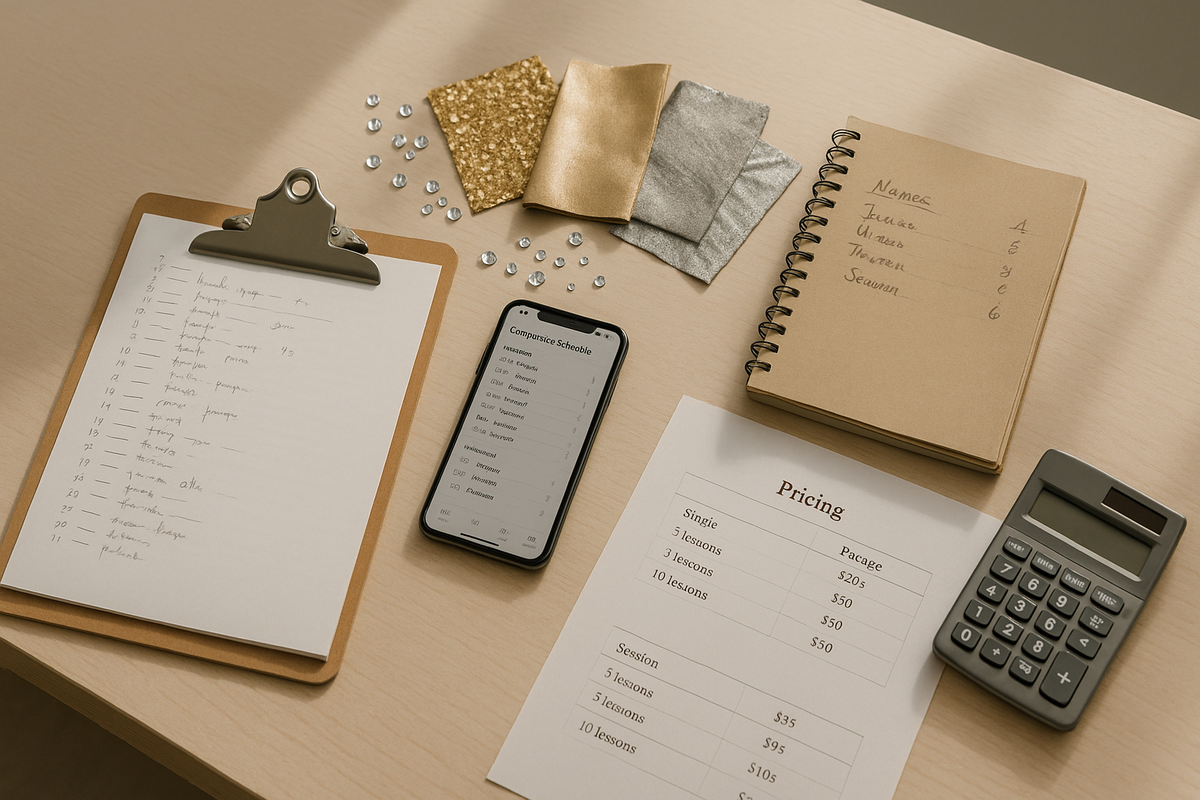
Private dance lessons cost $75 to $100 per hour in mid-size markets, with published rates ranging from $50 to $150 nationally. Urban studios, specialized competition coaching, and instructors with professional performance credits command the upper end. A typical pricing ladder includes $80 for 30 minutes, $105 for 45 minutes, $130 for 60 minutes, $180 for 90 minutes, and $245 for 120 minutes. These sessions generate $150 to $300 per instructor hour after costs, compared to $40 to $60 per hour for group classes when student count and room utilization are factored in.
Solo Choreography as Tiered Revenue Architecture
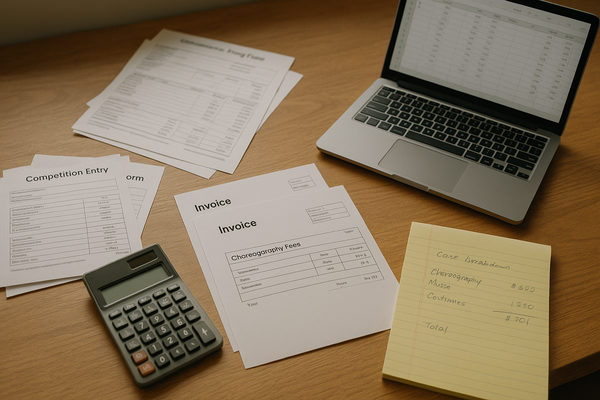
Competition studios are unbundling solo choreography from base tuition, creating discrete revenue tiers. Standard packages charge $350 to $450 for choreography, with some models adding $100+ per competition entry for ongoing cleaning sessions. Premium offerings scale significantly higher: Siempre Sol Dance lists a $1,500 solo choreography package that includes $165 per 50-minute private lesson, $250 music editing, and $110 performance showcase access, bundled as 27 sessions totaling $4,455 in retail value.
The incremental revenue compounds quickly. A dancer purchasing solo choreography at $400, plus three technique cleanings at $130 each, plus two conditioning sessions at $105 each generates $1,000 in private lesson revenue on top of monthly group tuition. Studios with 15 competition solos in a season add $15,000 to $20,000 in high-margin revenue without expanding facility capacity. LiveWire Tumbling's solo choreography page illustrates the per-competition coaching model, where families pay ongoing fees as dancers advance through regional and national events.
Avoiding Cannibalization of Group Enrollment
The operational challenge is positioning private lessons as enhancement rather than replacement. Studios that frame solo coaching as "advanced opportunity for ready dancers" rather than "what your child needs to succeed" protect group class enrollment while creating aspiration. One common structure borrowed from martial arts schools' add-on revenue models is the 30% rule: private lesson revenue should remain under 30% of total studio income to ensure group programs stay financially viable and culturally central.
Modular program design supports this balance. Competition programs now offer tiered participation levels, such as "Comp II" requiring one ballet class, one technique class, one production number, and one routine class, with attendance at one convention and three local competitions plus one national event, priced at $185 monthly. Private lessons sit alongside this structure as optional coaching, not mandatory prerequisites, keeping the group training pathway intact.
Identifying Which Dancers Are Ready for Private Coaching
Studios need transparent criteria for recommending private lessons to avoid parent perception of favoritism or revenue opportunism. Effective trigger points include: dancers placing in the top 25% at regional competitions who want to refine for nationals, students auditioning for summer intensives or pre-professional programs within six months, and dancers struggling with specific technical gaps (turning sequences, flexibility, performance quality) that group classes cannot address individually.
Communication framing matters. Borrowing from client plateau conversations in yoga studios, successful studios position private lessons as problem-solving tools rather than upsells. A conversation template: "Maya has excellent musicality, and we see her struggling with her à la seconde turns in the group setting where we can't give individual spotting time. A private session focused on core alignment and spotting mechanics would help her gain confidence before the February competition. We can schedule 45 minutes next Tuesday after her technique class." This approach addresses a visible need with a specific solution and timeline.
Scheduling and Staffing Systems That Scale
Private lesson programs fail when they become logistical chaos. Studios need three operational guardrails: instructor availability blocks, advance booking windows, and capacity limits. Most successful models allocate 20% to 30% of senior instructor hours to private lessons, mirroring the format mix strategy used in Pilates studios where privates account for 25% to 40% of session inventory.
Instructor compensation drives retention. Private lessons pay $60 to $120 per hour, creating significant income differences between teachers who maintain robust private lesson books and those relying solely on group classes. This pay differential is essential for retaining experienced faculty, as detailed in instructor compensation research, but studios must guard against burnout by capping private lesson hours at 10 to 12 per week per instructor and protecting preparation time.
Virtual and Hybrid Delivery Models
The online dance training market reached $2.9 billion in 2025 and is projected to hit $3.48 billion in 2026, growing at 20% annually. Hybrid memberships combining in-person and digital access are now standard, with 62% of learners attending at least one online class weekly. For competition-track private lessons, virtual delivery expands capacity without studio time constraints.
Start with video submission feedback packages at $50 to $75 per submission. Dancers record choreography run-throughs at home and receive detailed written or video feedback within 48 hours, covering corrections for specific counts, performance notes, and conditioning exercises. Add live Zoom sessions for students preparing for auditions or summer intensives, priced at $85 to $110 for 45 minutes. This model allows senior faculty to serve more students while controlling schedule density, and it creates revenue during studio off-peak hours and summer months when facility access drops.
Managing Parent Expectations Around Placement and Progress
Competition-track private lessons carry implicit promises about outcomes: solos that place, auditions that succeed, technique that visibly improves. Studios must set boundaries around what private coaching delivers versus what competitive success requires. Clear written policies address: how solo placement decisions are made (audition process, teacher recommendation, previous competition results), what private lesson packages include and exclude (choreography vs. ongoing cleaning sessions vs. costume consultation), and typical timelines for technique improvement (8 to 12 weeks for measurable progress on specific skills).
Dance Mogul's 2026 owner guide emphasizes retention is built on three things: a student who feels seen and is visibly improving, a parent who feels informed and valued, and an experience that feels like community rather than transaction. Private lesson programs position the instructor as mentor and problem-solver, not just choreographer. Monthly progress check-ins with parents, video documentation of before-and-after technique, and celebration of small wins (cleaner pirouettes, stronger leaps, improved facials) build trust that justifies premium pricing.
Which Instructor Profiles Justify Premium Rates
Not all instructors command the same private lesson pricing. Studios should tier rates based on verifiable credentials: performance history (professional company experience, national competition titles), specialized certifications (Progressing Ballet Technique, Acrobatic Arts, YPAD), competition coaching track record (students placing in top 10 at regional or national events in the past two seasons), and years of teaching experience (junior instructors at $75 to $90 per hour, senior faculty at $110 to $150 per hour).
Transparency about instructor qualifications supports premium pricing. Studio websites and private lesson marketing should list each instructor's training institutions, performance credits, competition coaching results, and areas of specialization (contemporary improvisation, musical theater character work, classical variations, acrobatic tumbling). Parents paying $130 for a 60-minute private session need to understand they are accessing expertise unavailable in the $18-per-dancer group class setting.
What This Means for Studio Operators
Editorial analysis, not reported fact:
Private lesson programs for competition-track dancers are not supplemental offerings. They are strategic revenue architecture that addresses three core business pressures: margin expansion without facility investment, instructor retention through differentiated pay, and family loyalty through personalized mentorship. Studios that treat private lessons as chaotic add-ons rather than designed programs create operational stress and disappoint families. Studios that build transparent criteria, clear pricing tiers, structured scheduling systems, and realistic outcome expectations create sustainable high-margin revenue that strengthens rather than cannibalizes group enrollment.
The operational model is more important than the price list. Start with 10% to 15% of competition families purchasing private coaching, targeting dancers with specific audition goals or technique gaps. Set instructor capacity limits at 20% to 30% of their weekly hours. Use virtual delivery to expand access without consuming studio space. Communicate eligibility and expectations clearly. Track revenue contribution and adjust pricing annually based on instructor experience growth and market positioning. Private lessons done well become the retention glue that keeps serious families committed through middle school and high school, generating five-figure lifetime value per dancer instead of two-year churn cycles.
Sources & Further Reading
- IBISWorld Dance Studios Industry Report 2025, market size and establishment count data
- Kitsune Pass Dance Studio Market Analysis 2026, competition team costs and solo economics
- Danza Academy Private Dance Lesson Pricing Guide, 2026 national pricing benchmarks
- Ensemble Schools State of the Dance Studio Industry 2025-26, retention and staffing data
- Dance Studio Journal: Online & Hybrid Revenue Models for Dance Studios 2026, virtual coaching packages and market growth
- Siempre Sol Dance Competition Program Pricing, premium solo choreography packages
- Dance Mogul Studio Operations 2026 Owner Guide, retention strategy and staff investment
- Team Just For Kix Dance Teaching Side Hustle Guide, private lesson pay tiers and teacher earnings
Editorial coverage of publicly reported industry developments. Dance Studio Journal has no commercial relationship with any companies named.