Parent's Guide to Verifying Dance Teacher Credentials
Dance teacher credentials aren't regulated by states. Here's how parents can verify certifications, spot fraud, and check safety training before enrollment.
Key Takeaways
- Dance teacher credentials vary widely because private studios face no state licensing requirements, unlike public school teachers, making it easy for instructors to claim certifications they don't hold.
- Recognized certifying organizations include the National Dance Education Organization (NDEO), Dance Masters of America, Royal Academy of Dance (RAD), and the Imperial Society of Teachers of Dancing (ISTD), each offering different pathways and rigor levels.
- Credential fraud is a documented $21 billion problem in education, with cases where dance teachers have been convicted of criminal fraud for claiming certifications they never completed.
- Background checks alone don't protect students because performing arts instructors control casting, solos, and advancement opportunities, creating power dynamics that can enable abuse even when criminal history is clean.
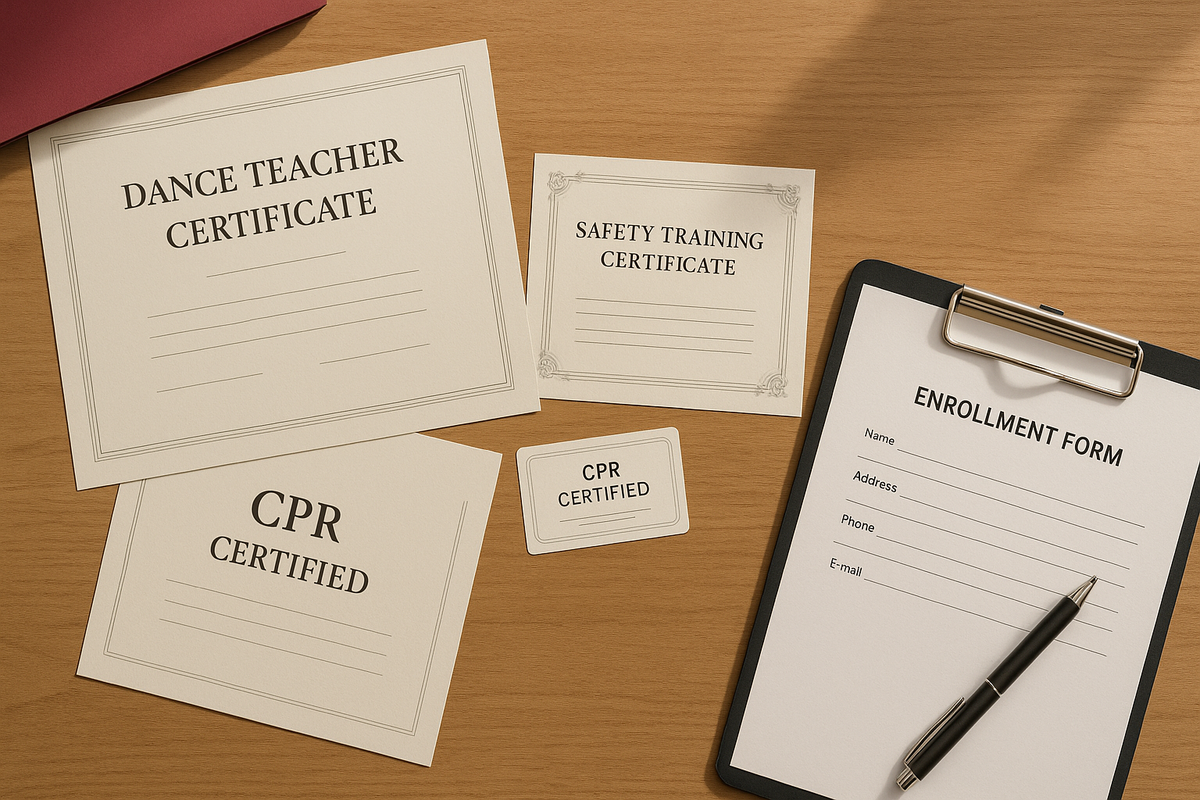
- Parents should verify credentials directly with issuing organizations, request documentation of CPR and first aid certification, and confirm the studio requires abuse prevention training such as YPAD Certification.
- Studios that implement comprehensive vetting gain competitive advantage in an unregulated market by demonstrating commitment to safety through transparent credentialing, background checks, and ongoing staff training.
The Credential Alphabet Soup: What Parents Are Actually Looking At
Unlike public school teachers who must meet state certification standards, private dance studio instructors can legally teach with zero formal credentials in most states. According to industry guidance, while dance teacher certifications are valuable professional development tools, there are no formal or legal requirements indicating these are needed to run a dance studio.
The landscape of recognized dance certifications includes dozens of organizations. The National Dance Education Organization (NDEO) offers a Certificate in Dance Education that requires three to five years to complete and can qualify professionals for state certification to teach in public schools. Dance Masters of America provides professional certification through a week-long training program costing $400. Organizations like RAD, Cecchetti Council of America, and ISTD offer genre-specific certifications with varying requirements.
With so many certifying bodies and nearly limitless opportunities for earning credentials, parents face a confusing marketplace where impressive-sounding certificates may represent vastly different levels of training and competency.
The Credential Fraud Problem Dance Studios Don't Talk About
Research on educational credential fraud reveals a $21 billion problem where fraudsters fabricate fake certificates, transcripts, and admission documents. While comprehensive data specific to dance teacher fraud remains limited, documented cases exist where teachers claimed valid certifications they had never completed, resulting in criminal fraud convictions.
The performing arts field shares credential verification challenges with other movement disciplines. As detailed in a recent analysis of credential fraud in martial arts, the ease of creating professional-looking certificates and the lack of centralized verification systems create opportunities for misrepresentation. The same vulnerabilities exist in dance, where parents typically accept credentials at face value rather than verifying instructor lineage and training claims.
What Background Checks Screen For and What They Miss
According to compliance guidance for dance studios, thorough background checks on all staff members including instructors, administrative staff, and volunteers help identify criminal history or potential risks. Best practices recommend that organizations conduct criminal background checks and reference checks for anyone with direct access to children as part of a broader safeguarding system that includes training and supervision.
However, background checks have significant limitations. Clean criminal records don't screen for instructors who lack actual credentials, haven't maintained required certifications, or operate in ethical gray zones. As documented in research on sexual abuse in performing arts programs, instructors control who advances through casting decisions, solos, lead roles, and opportunities beyond the studio. That control creates power dynamics that can enable manipulation even when no criminal history exists.
The Abuse Prevention Training Gap
Industry guidance recommends that studios adopt standards requiring abuse awareness, prevention, and response training such as YPAD Certification for all employees and contractors with student contact. Yet many studio operators remain ill-equipped because, as abuse prevention experts note, they've never been trained about red flags and don't recognize warning signs.
In some cases, studios or schools knew or should have known about inappropriate behavior but stayed quiet to protect their reputation, allowing abuse to continue. This institutional failure highlights why parent-led verification cannot rely solely on studio assurances.
Beyond the Resume: Practical Verification Steps for Parents
Parents should approach credential verification the same way studios verify barre credentials through publicly searchable registries and direct contact with issuing organizations. Here are specific questions to ask:
Credential Verification Checklist
- Does the teacher hold certification from a recognized national organization such as NDEO, Dance Masters of America, RAD, or ISTD?
- Can the studio provide documentation of teacher credentials, not just website claims?
- Are instructors certified in first aid and CPR, which can be life-saving in emergencies?
- Does the studio conduct background checks for all employees and contractors with student contact?
- Has staff completed abuse prevention training such as YPAD Certification?
- Can the studio provide references from other families and long-term students?
When screening instructor candidates, parents should request permission to contact the credentialing organization directly. Legitimate instructors understand this verification process, while those with questionable credentials often become defensive or evasive.
Red Flags Specific to Performing Arts Environments
According to research on abuse in performing arts programs, warning signs include instructors who isolate students from parents, communicate with minors through private channels, or create favoritism dynamics tied to opportunities. Parents should also watch for studios that discourage questions about credentials, lack transparent communication about staff qualifications, or cannot produce documentation when asked.
What This Means for Studio Operators
Editorial analysis, not reported fact:
Studios that implement comprehensive credential verification, background checks, and abuse prevention training gain significant competitive advantage in an increasingly scrutinized market. As parents become more aware of credential fraud and safety risks, transparent communication about staff qualifications becomes a differentiator rather than an administrative burden.
Operators should consider credential verification part of brand protection. Maintaining current staff certifications through documented checklists demonstrates professionalism that converts cautious parents into enrolled families. Studios that proactively publish staff credentials, certification expiration dates, background check policies, and abuse prevention training completion create trust that word-of-mouth advertising cannot buy.
The unregulated nature of private dance instruction creates risk for operators who hire without verification. One instructor with fraudulent credentials or a preventable incident can destroy years of reputation-building. Investing in thorough vetting processes costs far less than legal defense, insurance claims, or rebuilding community trust after a crisis.
Sources & Further Reading
- National Dance Education Organization (NDEO), certification standards and professional development for dance educators
- Dance Magazine: Dance Teacher Certification Guide, overview of major credentialing organizations and requirements
- Fake Teacher Certification Prosecutions, legal cases involving fraudulent educational credentials
- Learn Work Ecosystem Library: Fraudulent Credentials, research on the $21 billion credential fraud problem
- Dance Teacher Magazine: Recognizing and Reporting Child Abuse, guidance on YPAD certification and abuse prevention
- Sexual Abuse in Dance and Performing Arts Programs, legal analysis of institutional safeguarding failures
- Martial Arts Credential Fraud: Verification Guide, verification methods applicable across movement disciplines
- The Danger of Unqualified Dance Instruction in Private Dance Studios, Kennesaw State University research on credentialing gaps
Editorial coverage of publicly reported industry developments. Dance Studio Journal has no commercial relationship with any companies named.