How to Handle Difficult Dance Parents: A Leadership Guide
Distinguish problem parents from parents with problems, set pre-season expectations, and channel parental energy into studio allies with these proven systems.
Key Takeaways
- Problem parent versus parent with a problem: Distinguish between parents advocating respectfully for their child and those who repeatedly challenge studio authority. The first deserves a meeting; the second requires boundaries.
- Pre-season expectations meetings dramatically reduce mid-season conflict. Michele Larkin of Larkin Dance Studio holds parent meetings before the season starts to establish policies and encourage assumption of positive intent.
- 24-hour cooling-off rule: Mackenzie Larkin Symanietz asks parents to wait 24 hours after non-urgent issues before discussing them with leadership, allowing emotions to settle and conversations to be productive.
- Written policies and complaint forms create infrastructure that protects neutrality. Studios with documented handbooks and formal concern-submission systems experience fewer escalations and refund disputes.
- Channel parental energy constructively: Parents who want to help can be directed to backstage coordination, costume prep, or event support rather than decision-making roles, preserving studio authority while fostering involvement.
- Staff alignment is non-negotiable. Conflicting messages from teachers about policies or decisions create openings for parent frustration. Regular team briefings ensure consistency across all parent interactions.
Understanding the Difference Between Advocacy and Antagonism
Not every parent complaint signals a problem parent. Dance Studio Owner draws a critical distinction: a parent with a problem is advocating for their child with respect and intent to resolve. They ask for explanations, request meetings about class placement, or raise concerns about policies in a constructive manner.
A problem parent, by contrast, repeatedly challenges studio authority, offers unsolicited corrections to teachers, or demands special treatment outside established systems. In the competition dance world, this behavior ranges from complaining about judges' scoring to publicly undermining instructors. Recognizing the distinction allows studio operators to respond appropriately: one deserves a thoughtful conversation, the other requires boundary enforcement.
The Psychology Behind Difficult Behavior
When parents act in overbearing ways, the underlying cause is often identity, not malice. Dance Magazine notes that for many families, the dance-parent identity is deeply tied to their sense of purpose. Parents sit with a mixture of pride, worry, and hope regarding their child's journey, and these emotions directly influence how they engage with studio leadership.
Common flashpoints include class placement, audition results, solo assignments, costume choices, music selection, and payment schedules. Understanding that most difficult behavior stems from invested care rather than antagonism helps studio owners respond with empathy while maintaining firm policies.
Pre-Season Communication and Expectation Setting
Michele Larkin, co-owner of Larkin Dance Studio, recommends establishing expectations early to prevent blow-ups. Her studio holds a parent meeting before the season begins, where she encourages parents to communicate concerns while asking them to assume positive intentions so everyone can work together to solve problems.
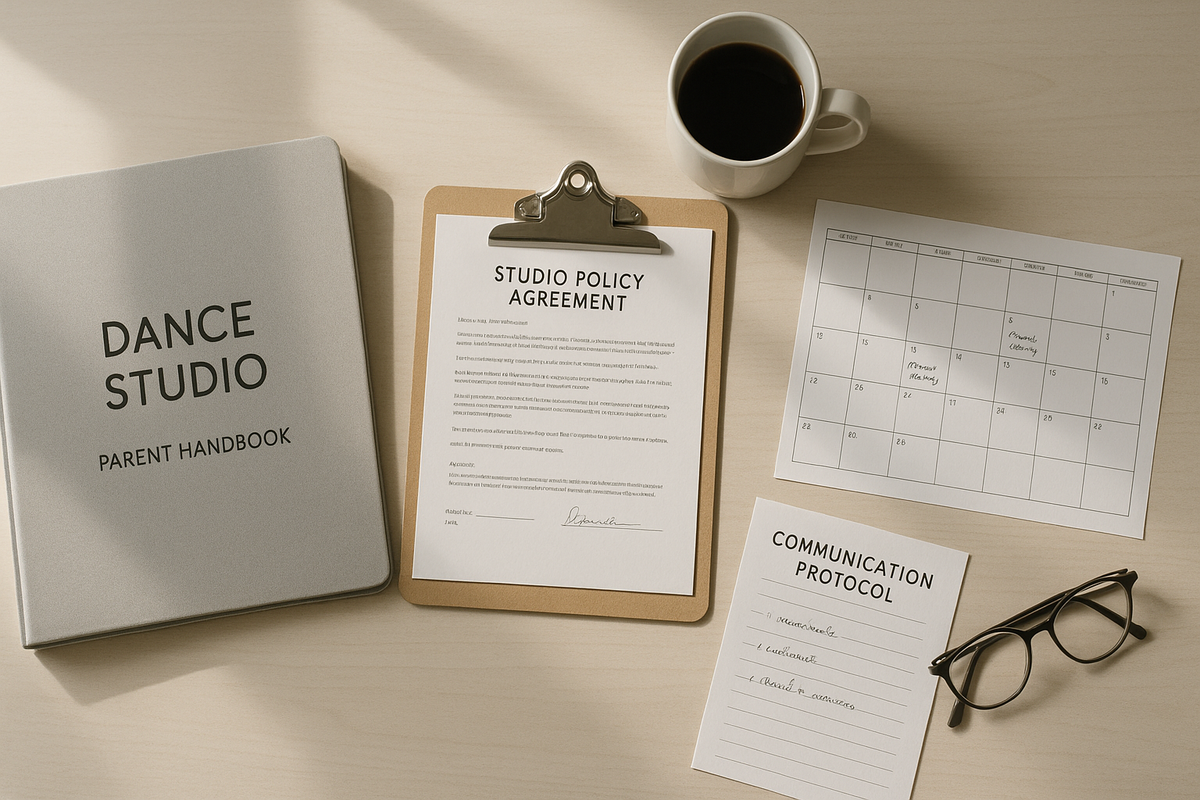
Clear upfront messaging is essential: parents will not be involved in the studio's decision-making process. Jackrabbit Dance emphasizes that having rules set in stone ensures all dancers have an even playing field. Studios that communicate policies during registration and provide a parent handbook experience fewer refund disputes and mid-season confrontations.
The 24-Hour Cooling-Off Rule
Mackenzie Larkin Symanietz, Michele Larkin's niece and fellow teacher, asks parents to wait 24 hours after non-time-sensitive issues occur before discussing them with studio leadership. This pause allows emotions to settle and prevents reactive conversations that escalate tension. Similar difficult conversations protocols in wellness studios emphasize scheduling private meetings with clear intentions stated upfront.
When difficult conversations are inevitable, proactive outreach defuses tension. If a dancer does not make the competition team after being selected the previous year, call the parent before publishing the list. Resourceful Dance advises being honest about the reasons for your decision and providing that heads-up to prevent public confrontations.
Building Communication Infrastructure
The last thing a studio needs is an angry parent confronting instructors in front of students. Tututix recommends establishing a formal complaint system and adhering to it consistently. Parent and student concern forms should be readily available in the studio, giving leadership time to review the issue, decide on a plan, and schedule an appropriate meeting with all parties involved.
Written materials are critical. Studios must be confident in their business model, staff qualifications, teaching methods, and service delivery, and they should have documentation to back up rules, policies, and procedures. The combination of confidence and written policies deters and quickly dissolves many potential conflicts.
Refund and Costume Policies
Most studios charge costume fees per class per dancer, with fees typically non-refundable once the order is placed. Canada Dances explains that costume manufacturers ship custom-sized garments that cannot be resold, making chargeback disputes common when families withdraw mid-season. Waivers should make this non-refundability explicit during registration to avoid confusion later.
Maintaining Boundaries and Neutrality
Clear policies around teacher access, rehearsal behavior, backstage conduct, and conflict resolution create stability. Kate Histon emphasizes that when boundaries shift, parents test them; when they hold steady, parents settle. A studio owner who becomes too close to one group risks compromising neutrality. Equal distance from all families protects both the owner and the culture of the studio.
Staff training is essential for boundary maintenance. Dance Studio Owner warns that if team members give out conflicting information, chaos follows. Regular staff meetings ensure everyone communicates the same policies, from costume deadlines to class placement criteria.
Redirecting Energy Constructively
Many parents genuinely want to help. When that desire is channeled into specific roles, it enriches the studio without blurring decision-making authority. Teachers recommend offering alternative ways parents can support their children, such as helping prepare costumes or providing snacks for the competition team. Event support, backstage assistance, or costume coordination provide a sense of involvement within healthy limits.
Kathy Blake, owner of Kathy Blake Dance Studios, reflects on her evolution: "For many, many years, I perceived the mothers as pitted against my own desires and intentions, and that didn't work very well. I have since learned the mothers and fathers are my greatest allies." Treating parents as customers and stakeholders rather than adversaries shifts the entire relational dynamic.
The Long View: Learning From Patterns
If complaints from parents are routine and feature common themes, it may be worth reconsidering the studio's conduct or policies. ClassForKids advises that adapting and learning from experiences is the key to a healthy studio. Feedback loops, even uncomfortable ones, can surface operational gaps that formal assessments miss.
Cindy Clough, executive director of Just For Kix and a teacher and studio owner with over 43 years of experience, offers perspective: "In the early years, parent issues could have been the one thing that got me to give up teaching. Hang in there—it does get easier."
What This Means for Studio Operators
Editorial analysis, not reported fact:
The distinction between infrastructure and instinct matters. Studios that rely on improvised responses to parent conflicts will always be reactive. Those that build systems—pre-season meetings, formal complaint forms, documented refund policies, staff training schedules—can redirect their energy from crisis management to culture building.
The 24-hour rule is particularly underutilized. It costs nothing to implement and offers both parties space to move from emotion to problem-solving. Similarly, proactive outreach before predictable disappointments (team cuts, role assignments) prevents public confrontations and demonstrates respect for the parent-studio relationship.
Finally, the reframe from adversary to ally is not just philosophical. Parents who feel heard, respected, and given appropriate channels for involvement become advocates. They refer new families, volunteer at events, and model the studio's values in their community. The emotional labor of managing difficult parents is real, but the long-term payoff of treating them as stakeholders rather than obstacles reshapes studio culture at scale.
Sources & Further Reading
- Dance Teacher Magazine: Problematic Dance Parents, March 2025 coverage of Michele Larkin's pre-season meeting strategy and 24-hour cooling-off protocols
- Dance Magazine: Dealing With Dance Parents, March 2025 analysis of parent psychology and identity dynamics
- Dance Studio Owner: Problem Parent Versus Parent With a Problem, foundational framework for differentiating advocacy from antagonism
- Kate Histon: Managing Dance Parent Dynamics, February 2026 guidance on boundaries and neutrality in studio ecosystems
- Jackrabbit Dance: Communication Strategies, September 2025 best practices for parent handbooks and expectation setting
- Canada Dances: Refund Policies Every Studio Should Have, March 2026 overview of costume fee disputes and chargeback prevention
Editorial coverage of publicly reported industry developments. Dance Studio Journal has no commercial relationship with any companies named.