Formation Planning for Large Recital Numbers in 2026
How studios are using anchor dancers, digital staging tools, and transition discipline to manage 50+ dancer ensembles while coordinating backstage flow.
Key Takeaways
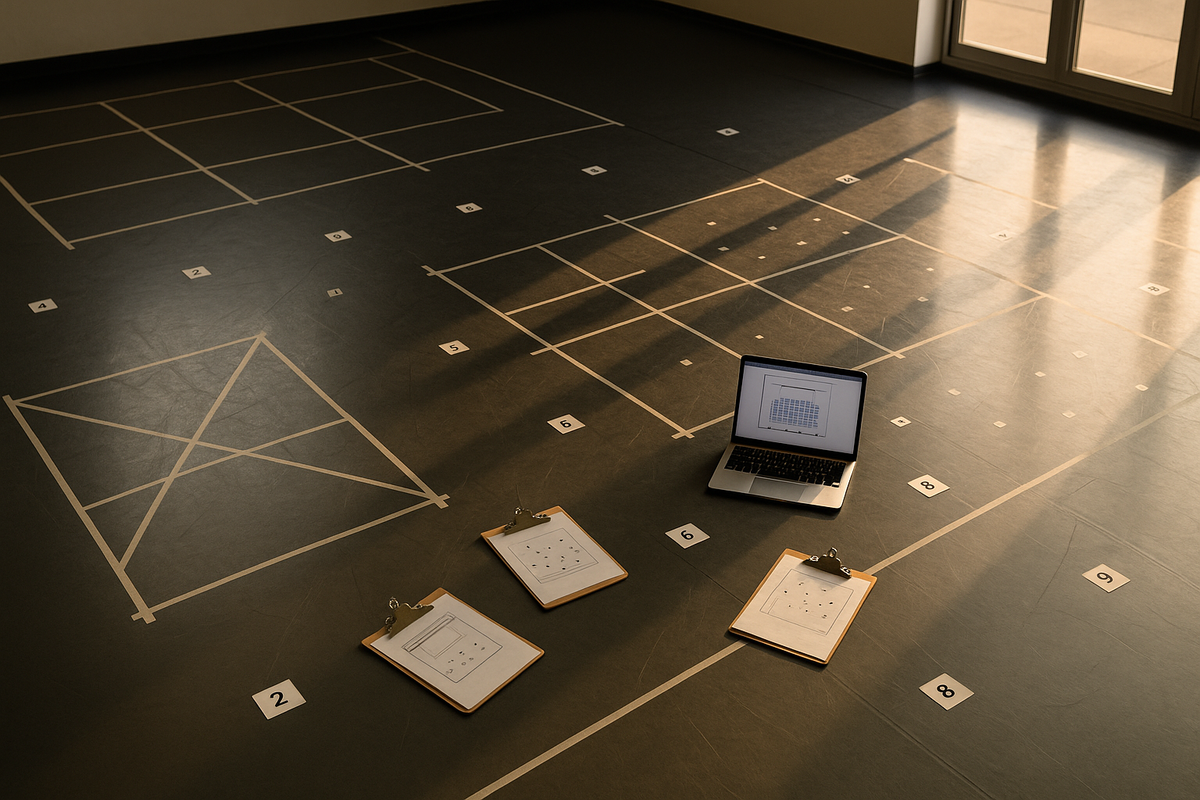
- Spacing calculations: Plan approximately 28 by 16 feet for 10 dancers in two open rows of five, maintaining about 6 feet between neighbors to prevent collisions and preserve visual impact.
- Transition discipline: Choreographers like Joanne Chapman use consistent movement vocabulary (such as jazz walks) for all entrances and exits, slightly overlapping timing to ensure seamless flow between sections.
- Anchor dancer method: Positioning a few stable anchor dancers allows the rest of the ensemble to align faster, especially when spacing notes are attached to specific counts in the choreography.
- Digital planning tools: Free and low-cost platforms including Stage Stubs, DanceTeacherWeb, Choreoto, and FORMI now allow studios to visualize formations, calculate spacing, and map collision-free transitions before entering the rehearsal room.
- Backstage integration: Formation planning must coordinate with quick-change logistics, with studios like Royal Dance Works using labeled paper bags and dedicated quick-change booths to support transitions between large ensemble numbers.
Why Formation Planning Demands Strategic Attention
As studios scale their annual recitals and ensemble productions grow to 50 or more dancers, choreographers face mounting pressure to balance visual impact, dancer safety, and seamless transitions. Joanne Chapman, director of Joanne Chapman School of Dance in Brampton, Ontario, regularly mounts production numbers for 55 to 115 dancers aged 5 to 18. She emphasizes that getting groups of dancers on and off the stage represents one of the toughest challenges of large pieces.
Proper spacing is not merely aesthetic. When dancers are positioned too close together, movements become restricted and collisions increase. Too far apart, and the stage appears empty while choreography loses its impact. According to spacing guidelines from Stage Stubs, studios should plan on roughly 28 by 16 feet for 10 dancers in two open rows of five, keeping about 6 feet between neighbors.
Choreographic Frameworks for Large Ensembles
Professional choreographers approach large-group numbers as multi-layered design problems rather than simply scaling up small-group work. Chapman subdivides pieces into sections based on technical level, allowing each group to showcase strengths. When the full ensemble comes together, she keeps difficulty levels relatively accessible to ensure all dancers can execute cleanly.
Featured moments within mass formations create visual variety. Matthew Neenan notes that one dancer performing turns or acrobatic tricks while everyone else holds on the floor can elevate the entire number. Many choreographers employ canons, with each line starting the same phrase on a different count to create wave effects across the stage.
The Anchor Dancer Method
Rather than attempting to correct all dancers simultaneously, experienced directors use anchor dancers to stabilize the picture. According to rehearsal strategies documented by SF Conservatory of Dance, the rest of the team can align faster when a few anchor positions remain stable. Attaching spacing notes to specific counts makes corrections repeatable. A spacing adjustment becomes easier to internalize when tied to the musical arrival point.
Common Formation Patterns and Visual Design
A dance formation is the arrangement of dancers on stage in specific patterns that emphasize choreography and support storytelling. Formations change throughout a performance to add variety and enhance flow. Common large-group arrangements include:
- Horizontal lines: Dancers spread across the entire stage width with significant gaps between them, making the group appear larger and filling space.
- Circles: Ten dancers evenly spaced on a circle creates unity and central focus.
- Pyramids: One dancer at the tip, then rows of two, three, and four fanning behind, reading like a fan opening from the front row of the house.
Using space creatively becomes part of how choreographers develop their original voice. Groupings allow more dancers to share limited square footage while maintaining safety margins recommended by injury prevention guidelines.
Transitions as Hidden Choreography
Chapman makes transitions between sections seamless by using a consistent movement vocabulary for all entrances and exits, slightly overlapping timing to ensure smooth flow. Large routines become easier to improve when divided into manageable parts, according to rehearsal methodology research. Studios should work on one section at a time until transitions become reliable, then combine sections into longer runs.
A 32-count section might contain four or five transition points. Each should be practiced separately before being linked together. This granular approach reduces rehearsal frustration and allows directors to isolate problem areas without exhausting the full cast.
Digital Tools for Formation Planning
The market for staging and formation planning software has matured significantly in 2026. Stage Stubs offers a free stage planning tool that allows dance schools to visualize dancer positions, calculate spacing, and plan formations for specific stage dimensions. The DanceTeacherWeb Formation Tool generates printable PDF formation sheets for sharing staging notes with dancers and assistants.
Choreoto turns vague spacing notes into visible, repeatable corrections and pairs with formation templates designed for lines, diagonals, grids, and large recital groups. FORMI allows planning on surfaces that match performance venues, from proscenium stages to outdoor spaces, ensuring corps spacing holds from studio to stage. StudioPartner enables directors to place dancers on a real-size stage, add levels, animate transitions, and download routines as shareable videos.
These tools reflect rising industry demand for practical solutions to what has traditionally been a manual, trial-and-error process. Studios can now rehearse transitions digitally before consuming valuable studio time, similar to how sophisticated operations use recital coordination tools to manage production timelines.
Backstage Flow and Quick-Change Coordination
Formation planning cannot be separated from backstage logistics. Carole Royal of Royal Dance Works in Phoenix sets up a quick-change booth on the side of the stage. Anyone with a fast change (fewer than three numbers between dances) sets up a paper bag with the quick-change costume, clearly labeled. The studio determines all quick changes beforehand, typically accommodating eight people in the booth.
Carol Zee, artistic director of The Gabriella Foundation, assigns specific roles including stage manager, on-deck supervisor, quick-change supervisor, stage left headset, stage right headset, and dressing room monitors. Efficient backstage flow enables quick transitions between performances by having dancers ready in the wings before their cue, clearing the stage promptly after each act, and coordinating costume changes and prop setups in advance.
What This Means for Studio Operators
Editorial analysis, not reported fact:
Studios planning large ensemble numbers for spring 2027 recitals should begin formation planning during fall 2026 choreography sessions rather than waiting until tech week. Investing two hours in digital formation mapping can eliminate six hours of frustrated rehearsal time in April. Directors should designate anchor dancers early in the rehearsal process and communicate spacing expectations tied to specific musical counts, not vague spatial references.
The availability of free formation tools removes cost barriers that previously justified ad-hoc planning. Studios already managing schedules and parent communication through software platforms should extend that systematic thinking to production logistics. Formation planning integrates directly with backstage coordination responsibilities that may currently fall under group programming management roles at larger operations.
Consider building a pre-production timeline that includes: formation mapping completion six weeks before recital, transition video distribution to all dancers four weeks out, full run-throughs with backstage flow integration three weeks before performance, and a dress rehearsal that functions as an operational systems trial two weeks prior, similar to strategies used in event production logistics for studio launches.
Sources & Further Reading
- Dance Spirit: Choreographing for Large Groups, featuring interviews with Matthew Neenan and Joanne Chapman on ensemble choreography strategies
- Stage Stubs Formation Planner, free tool for visualizing dancer positions and calculating spacing
- Choreoto: Clean Dance Formations Faster, formation planning methodology and template resources
- DanceTeacherWeb Formation Tool, printable PDF formation sheet generator
- Dance Teacher: How to Make Quick Changes Easier, backstage logistics and quick-change booth strategies
- SF Conservatory of Dance: How to Drill Dance Transitions, rehearsal methodology for large ensembles
- Rockstar Academy: Dance Formation Ideas, overview of formation patterns and visual design principles
Editorial coverage of publicly reported industry developments. Dance Studio Journal has no commercial relationship with any companies named.