Firing a Teacher: Legal & Professional Termination Guide
Navigate instructor termination legally with contracts, documentation, YPAD standards, and communication strategies that protect your studio from liability.
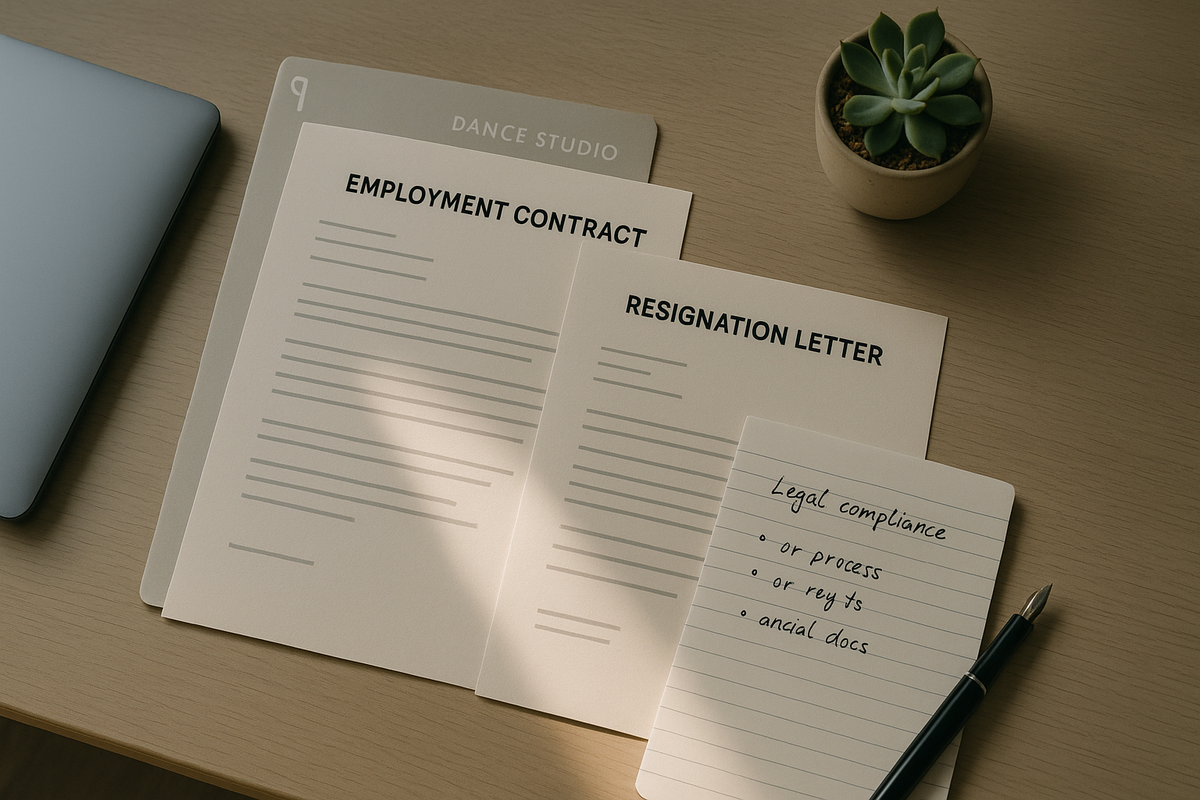
Key Takeaways
- At-will employment allows most U.S. studio owners to terminate teachers without cause, but not for illegal reasons like discrimination, and documentation remains essential to defend against wrongful termination claims.
- Written contracts with clear termination clauses protect both parties and should specify notice periods (typically two weeks to one month), performance expectations, and circumstances permitting immediate dismissal such as theft or student endangerment.
- Progressive discipline documentation is critical for performance-based terminations: every incident requires signed, dated documentation in the employee's file to demonstrate you provided opportunity for improvement before termination.
- Sexual misconduct allegations carry severe liability and reputational risk; studios must conduct proper investigations, avoid unverified public statements, and consult legal counsel before communicating about terminations involving sensitive claims.
- YPAD (Youth Protection Advocates in Dance) certification requires background checks every two years, mandated reporter training, and abuse prevention protocols that reduce liability exposure and demonstrate proactive safeguarding when termination becomes necessary.
Understanding Employment Classification and At-Will Doctrine
Most dance and Pilates instructors in the United States work under at-will employment, which allows either party to end the relationship at any time, for almost any reason. However, this flexibility does not protect studio owners from wrongful termination claims if the dismissal violates anti-discrimination laws or contradicts explicit contract terms.
Employment classification matters significantly for termination procedures. Independent contractors cannot be fired without financial consequence as long as they fulfill their contractual obligations, and misclassifying W-2 employees as 1099 contractors can trigger FICA tax penalties and negative publicity. Studios should review their instructor classification compliance before initiating any termination process.
State-level variations add complexity. While Texas follows strict at-will doctrine, other states impose additional notice requirements or recognize implied contracts through employee handbooks. Numerous states have laws that specifically target dance studios, with consequences for noncompliance ranging from fines to criminal charges in certain circumstances.
Contracts and Documentation: Your Legal Foundation
A comprehensive written contract is your first line of defense. According to dance studio contract best practices, every teacher agreement should specify responsibilities, pay structure, schedule, and explicit termination terms. Without clear termination clauses, studios risk disputes about when and how either party can end the arrangement.
Typical notice periods range from two weeks to one month, but contracts should also identify scenarios permitting immediate dismissal. Theft, illegal activities, or student endangerment represent situations where immediate termination without notice is legally defensible. Be specific: ambiguous language creates liability exposure.
Beyond contracts, implement a structured documentation system. Employee handbooks should detail acceptable performance standards and behavior expectations, with levels of consequence for each type of infraction. Every disciplinary action requires a signed, dated form in the employee's file. This standardized approach removes emotion from the process and creates the paper trail that protects your business in litigation.
Performance-Based Terminations: Progressive Discipline in Practice
When terminating for performance issues, documentation demonstrates you provided opportunity for improvement. One studio director addressed a habitually late teacher by first proposing a collaborative improvement plan: "Let's come up with a plan of how we can work together to improve things." After a month without change, the termination was legally defensible because the employee had effectively "fired herself" by failing to meet documented expectations.
The principle is to address the action, not the attitude. Focus on specific, observable performance deficits rather than emotional states or personality conflicts. Document each conversation with concrete details: dates, times, specific behaviors observed, and improvement timelines agreed upon. This approach aligns with broader instructor turnover and retention strategies by giving teachers clear feedback before termination becomes necessary.
For chronic issues, establish a three-step process: verbal warning with documented conversation notes, written warning with improvement timeline, and final written warning before termination. Each step should include the employee's signature acknowledging receipt and understanding of expectations.
High-Stakes Misconduct: Navigating Sexual Abuse and Safety Allegations
Dance studios face unique safeguarding risks due to physical contact, unsupervised access to minors, and the authority instructors hold over students. Without sexual abuse and molestation coverage, a single allegation could end a studio's future, making proper termination procedures critical when misconduct surfaces.
Recent industry cases illustrate the stakes. The Cleveland Ballet fired its remaining co-founder in January 2024 after an independent investigation revealed a pattern of intimidation, retaliation, egregious misconduct, and financial irregularities. Meanwhile, 56 former students at the University of North Carolina School of Arts accused faculty of abusive misconduct including rape spanning 40 years, and 120 current and former students at Rider University's Theater and Dance Department submitted complaints of sexual harassment, racism, and body shaming.
When terminating amid sensitive allegations, communication is as critical as the decision itself. One dance instructor successfully sued for breach of contract after asserting wrongful termination based on false sexual harassment accusations. The studio published a statement about "fully investigating the charges" before completing that investigation, creating liability. Courts allowed the breach-of-contract claim to proceed because the studio made unverified public statements.
When evaluating studio liability, courts consider how much authority and unsupervised access the business gave an employee, and whether that level of trust was reasonable given any warning signs. Avoid making false or unverified statements that could harm the instructor's reputation. Focus on factual, neutral communication without attributing motives. Limit disclosures to necessary information and consult legal counsel before any public statement.
YPAD Certification and Proactive Risk Mitigation
Youth Protection Advocates in Dance (YPAD) is the nation's only dance certification program focusing on both safety and wellness for students. To earn YPAD certification, studios must complete two training tracks covering background checks, CPR and First Aid, abuse awareness and prevention, injury prevention, and safety preparedness.
A YPAD Certified Studio means all staff have completed Safety & Wellness modules, passed background checks, maintain First Aid/CPR certification, and agree to serve as mandated reporters. Background checks must be renewed every two years at minimum. This creates a documented framework that reduces liability when termination becomes necessary, demonstrating the studio maintained appropriate hiring and monitoring standards.
YPAD certification also provides operational cover when communicating about terminations. You can reference that all staff are held to YPAD standards without discussing specific allegations, protecting both the studio's reputation and avoiding defamation claims while signaling to parents that safety protocols remain intact.
Defamation Risks: What You Can and Cannot Say
Studio owners often face pressure from parents to explain why a popular teacher suddenly departed. Resist the urge to share details. Uncertainty about permissible statements and fear of legal retaliation are well-founded: defamation claims can arise from statements made to other employees, parents, or on social media.
Stick to factual, verifiable statements. "We've decided to part ways" or "Their contract has ended" are legally safe. Avoid characterizations like "unprofessional," "inappropriate with students," or "unsafe" unless you have completed a formal investigation with documented evidence. Even true statements can trigger litigation if the terminated employee claims you selectively disclosed damaging information.
When parents press for details, redirect to your studio's commitment to safety standards rather than discussing the individual. Reference your YPAD certification, background check policies, or general commitment to student welfare. Document any parent complaints in writing and store them in a secure file separate from personnel records, as these may become evidence if litigation arises.
When to Involve Legal Counsel
Consult an employment attorney before terminating in these situations: any allegation involving minors or sexual misconduct; termination of an employee who recently filed a workers' compensation claim or complained about discrimination; dismissal of an employee with a written contract exceeding one year; or any case where the employee has threatened litigation.
Legal counsel can review your documentation, advise on communication strategy, and draft termination letters that protect against wrongful termination claims. The cost of a consultation is minimal compared to defending a lawsuit. Many employment attorneys offer flat-fee termination consultations specifically for small business owners.
Also consult your insurance broker about your studio liability and SAM coverage before terminating amid misconduct allegations. Your Employment Practices Liability Insurance (EPLI) may require notification before termination or cover legal defense costs if you follow specific procedures.
What This Means for Studio Operators
Editorial analysis, not reported fact:
The current environment demands higher operational standards than even five years ago. With high-profile abuse cases across university dance programs and professional companies, parents expect transparency and proactive safeguarding. Your termination procedures are not just legal protection but reputation management.
Implement three practices immediately: First, audit every instructor contract to ensure clear termination clauses and performance standards exist in writing. Second, create a simple documentation form for verbal warnings and performance conversations, and train yourself to complete it within 24 hours of any corrective discussion. Third, establish a relationship with an employment attorney before you need one, so you have counsel available when urgent situations arise.
The studios that weather misconduct allegations successfully are those with paper trails showing they took hiring, training, and supervision seriously from day one. YPAD certification is no longer optional if you teach minors; it's the industry standard that demonstrates due diligence. The investment in proper procedures and documentation is far less than the cost of a single wrongful termination claim or the reputational damage from mishandling a teacher's departure.
Sources & Further Reading
- Dance Teacher: Letting Go, guidance on performance-based terminations and progressive discipline
- GoStudio Pro: Dance Teacher Contract Sample, contract must-haves including termination clauses
- SixFifty: At-Will Employment Policy, explanation of at-will doctrine and legal limitations
- Youth Protection Advocates in Dance: Membership & Certification, official YPAD certification requirements and safety standards
- Pospis Law: Dance Teacher Contract Breach Case, legal analysis of defamation and communication risks during termination
- Constant Legal Group: Studio Liability for Employee Misconduct, how courts evaluate studio responsibility and unsupervised access
Editorial coverage of publicly reported industry developments and legal principles. Dance Studio Journal has no commercial relationship with any companies or legal services named. This article provides general information only and does not constitute legal advice. Consult a licensed employment attorney in your state for guidance on specific termination situations.