Commercial Auto Insurance for Dance Studios That Travel
Standard general liability policies don't cover student injuries during competition travel. Here's what commercial auto and HNOA coverage cost in 2026.
Key Takeaways
- Standard general liability policies do not cover student injuries during competition travel, including transportation accidents, hotel falls, or off-site recreational activities—a gap many studios discover only when filing a claim.
- Commercial auto insurance costs dance studios $140 to $245 per month ($1,700 to $2,942 annually), depending on the number of vehicles, coverage options, driver records, and whether the studio owns vehicles or uses hired and non-owned auto (HNOA) coverage.
- Liability waivers signed for regular studio classes do not automatically extend to competition travel, leaving studios exposed to claims arising from transportation, lodging, and off-site venue incidents.
- Competitive studios should budget 1 to 3 percent of annual revenue for insurance, with the higher end applying to programs with regular regional or national competition travel.
- Underwriters assess competition travel risk by evaluating the number of students transported per trip, distance traveled, driver qualifications, vehicle ownership, and claims history when pricing policies.
The Coverage Gap Most Studios Discover Too Late
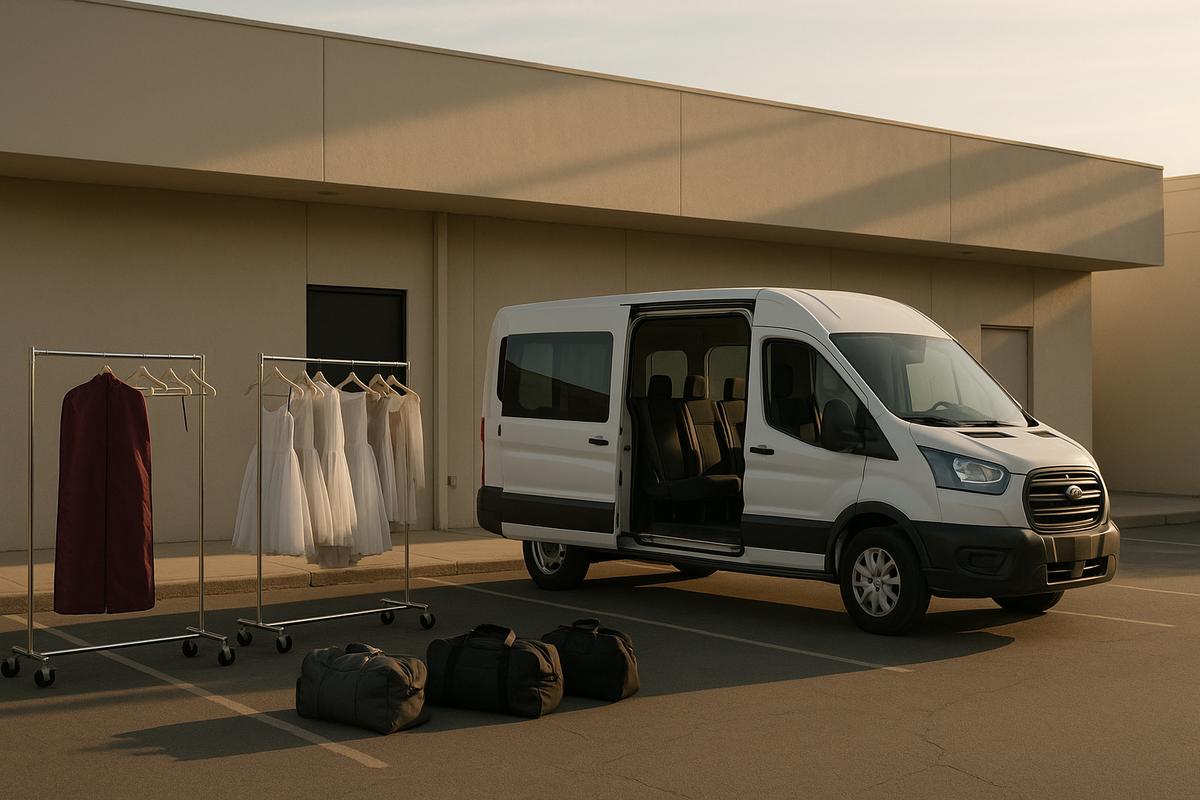
A competitive dance team boards a 15-passenger van for a regional competition three states away. En route, the driver swerves to avoid debris and the vehicle rolls. Three students sustain injuries requiring emergency care and extended physical therapy. The studio owner assumes the general liability policy will cover medical costs and potential lawsuits. It does not.
Standard general liability policies explicitly exclude student injuries during travel itself, including transportation accidents, hotel falls, and off-site recreational activities. According to Insureon, this is distinct from on-premises studio liability. When studios incorporate competition travel coverage, they encounter new locations, new transportation requirements, and new venue insurance rules that general liability does not address.
Company-Owned Vehicles vs. Hired and Non-Owned Auto Insurance
Studios transporting students have two primary insurance pathways. For company-owned vehicles, commercial auto insurance is required. This coverage pays for legal costs and medical bills if a studio-owned vehicle injures someone or damages property in an accident. Each state has its own requirements for auto liability insurance, and most states mandate commercial auto coverage for business-owned vehicles.
For studios that rely on staff or instructor personal vehicles, hired and non-owned auto insurance (HNOA) provides liability coverage for personal, rented, and leased vehicles used for work purposes. HNOA is typically an endorsement added to the studio's general liability policy and covers gaps when an instructor's personal auto policy limits are exhausted or exclude business use.
What Commercial Auto Policies Cover
According to Insureon, commercial auto insurance covers legal costs and medical bills if a company vehicle causes an accident, plus vehicle theft, vandalism, and weather damage. Studios can add collision and comprehensive coverage for damage to their own vehicles while driving for work. Larger studios may also add inland marine insurance, which protects sound systems, portable barres, rolling mirrors, and portable dance floors while in transit, stored off-site, or used at competitions and venues.
What Competition Travel Insurance Actually Costs in 2026
Small business owners, including dance professionals, pay an average of $245 per month, or $2,942 per year, for commercial auto insurance. Some carriers quote lower: commercial auto insurance costs dance studios approximately $140 per month or $1,700 yearly if they own vehicles for business use.
The wide range reflects differences in underwriting criteria. According to Insureon, the cost depends on coverage options chosen (such as additional insured endorsements), any exclusions, the number and value of vehicles, and the driving records of anyone permitted to drive. Farmer Brown Insurance notes that underwriters also evaluate whether the studio joins competitions: if the studio has a team that travels to competitions or rents spaces for performances, insurers will account for this added risk.
Underwriting Questions That Determine Your Premium
When a studio applies for commercial auto or HNOA coverage, carriers ask specific questions tied to competition travel risk. These include the number of students transported per trip, average distance traveled, frequency of out-of-state trips, driver qualifications and Motor Vehicle Records (MVRs), vehicle age and maintenance records, and prior claims history.
Studios should be prepared to document driver vetting procedures, such as annual MVR checks and minimum age or experience requirements. Carriers may also request copies of vehicle maintenance logs and evidence of driver training protocols. Studios that cannot demonstrate formal driver qualification processes typically face higher premiums or coverage exclusions.
Why Standard Liability Waivers Do Not Cover Competition Travel
Many studio operators assume that the liability waiver signed during fall registration extends to all studio activities, including off-site competitions. It does not. As Vibe Fam notes, operators flag in dance forums that waivers signed for general studio training do not necessarily extend to tournament or competition injuries.
Waivers must be event-specific and signed with full knowledge of the risks involved. A waiver covering in-studio falls and sprains does not inform parents of the risks of highway travel, hotel liability, or injuries occurring at third-party venues. Studios should require separate competition travel waivers that explicitly enumerate transportation, lodging, and venue-related risks. Even with well-drafted waivers, studios remain exposed without proper insurance, as waivers reduce but do not eliminate liability.
Additional Insured Endorsements and Venue Requirements
Competition venues and hotels often require studios to add them as additional insureds on the studio's liability policy. This endorsement extends the studio's liability coverage to the venue or property owner in the event of a claim. Studios without this endorsement may be denied entry to competitions or required to purchase expensive one-time event coverage on-site. Confirming additional insured requirements with each venue at least 30 days before travel prevents last-minute scrambles and coverage gaps.
Red Flags in Dance Studio Auto Policies
Not all commercial auto policies are created equal. According to F Dean Insurance, insurance programs that exclude coverage for punitive damages or fail to offer protection for non-owned/hired auto liability or abuse and molestation leave studios vulnerable to lawsuits without proper coverage. Studios should confirm that their policy includes punitive damages coverage, hired and non-owned auto liability as an endorsement or standalone policy, and abuse and molestation coverage with minimum limits of $1 million per occurrence.
Studios should also verify that the policy covers out-of-state travel, as some regional carriers restrict coverage to in-state operations. Finally, review exclusions carefully: some policies exclude coverage if a driver does not hold a valid commercial driver's license (CDL) for vehicles over a certain passenger capacity.
Budgeting for Insurance as a Competitive Studio
When building a year-one budget, studios should model insurance at roughly 1 to 3 percent of revenue, with the higher end of the range applying to competitive studios that travel. For a studio generating $300,000 in annual revenue, this translates to $3,000 to $9,000 in total insurance costs, including general liability, commercial auto or HNOA, professional liability, property, and inland marine coverage.
Studios should review coverage annually if team composition, travel scope, or vehicle ownership changes. Adding a second competition team, increasing out-of-state travel frequency, or purchasing a second vehicle all trigger underwriting reassessment and potential premium adjustments. Working with a licensed insurance agent who specializes in dance or youth sports ensures that coverage evolves with the studio's risk profile.
What This Means for Studio Operators
Editorial analysis, not reported fact:
The competition travel insurance gap represents one of the most significant unmanaged risks in the dance studio industry. Studios that build thriving competitive programs often do so without realizing that their foundational general liability policy stops protecting them the moment students leave the building. The financial and reputational consequences of an uninsured transportation accident can end a studio's operations overnight.
Studio operators should treat competition travel insurance as a non-negotiable cost of running a competitive program, not an optional add-on. This means budgeting for commercial auto or HNOA coverage from the first season a team travels, not waiting until a near-miss or actual incident forces the conversation. It also means auditing vehicle use, formalizing driver qualification protocols, and requiring event-specific waivers that document the full scope of travel risks.
Finally, studios should resist the temptation to rely on instructor personal auto policies or informal carpooling arrangements. These approaches shift liability onto individual instructors, create coverage gaps when personal policies exclude business use, and expose the studio to claims that fall outside any policy's scope. Formal, studio-level commercial auto or HNOA coverage is the only way to ensure that the business, its employees, and its students are protected during the competition season.
Sources & Further Reading
- Dance Studio Insurance in 2026: The Complete Guide for Studio Owners and Teachers, Vibe Fam coverage of competition travel gaps and budgeting
- Dance Studio Insurance from Insureon, overview of general liability, commercial auto, and HNOA coverage options
- Cost of Dance Studio Insurance, 2026 pricing benchmarks for commercial auto and general liability
- Farmer Brown Dance Studio Insurance, state requirements and underwriting criteria for competition travel
- K&K Dance School Insurance, inland marine and additional insured endorsements
- F Dean Dance Schools and Studios Insurance, red flags and coverage exclusions to avoid
Editorial coverage of publicly reported industry developments. Dance Studio Journal has no commercial relationship with any companies named.