Brain-Compatible Dance Teaching: The New Pedagogy Standard
Dance education is shifting from technique-first to brain-compatible, somatic-informed teaching. Here's what motor learning science and anatomical corrections mean for your studio in 2026.
Key Takeaways
- Curriculum structure is now a competitive standard: Dance studios with documented, level-by-level curricula and progress-tracking systems attract more students and parents who value structured training, while platforms like Dance Studio Syllabus and Dance The Cutting Edge's Basic Syllabus now provide ready-to-use lesson plans covering 16+ genres for dancers ages 3–18.
- Anatomically-informed corrections outperform traditional cues: Research shows that common corrections like "squeeze the glutes" can inhibit hip range of motion, while active instructions referencing skeletal and muscular anatomy produce greater understanding and retention among dancers.
- Kinesthetic feedback transfers to neuromuscular learning faster than verbal corrections: Physically placing students in position and running them through the desired motion proves more effective than telling or showing, as verbal information does not transfer as quickly to the neuromuscular level.
- Brain-compatible and somatic methods are entering mainstream pedagogy: Approaches incorporating polyvagal theory, motor learning science, and somatic education—including Anne Green Gilbert's BrainDance and Dr. Martha Eddy's BodyMind Dancing—are reshaping how teachers cue dancers to prioritize sensation over visual forms.
- Professional development standards are rising for private studio educators: The National Dance Education Organization's Certificate in Dance Education (CiDE) and DEL Institute's yearlong online program now require evidence of pedagogy, learning theory, and disabilities education for teachers in private studios, performing arts organizations, and community centers.
Why Dance Pedagogy Is Shifting From Technique-First to Brain-Compatible Teaching
Dance education in the United States is experiencing a fundamental methodological shift in 2026. Traditional directive teaching rooted in external feedback and mirror-based corrections is being challenged by emerging research in motor learning science, neuroscience, and somatic education. A growing cohort of pedagogical resources, teacher trainings, and published research now advocate for approaches that emphasize internal feedback, nervous system regulation, and anatomical clarity in corrections.
The question for studio owners and instructors is no longer whether to formalize curriculum planning. It has become how to do so in ways that integrate somatic awareness, inclusive corrections, and learner-centered progression grounded in developmental neurology rather than rote technique transmission.
Structured Curricula Have Become Essential Competitive Infrastructure
A dance studio with a clear, documented curriculum now presents a more professional image and attracts both students and parents who value structured training. Dance Studio Syllabus offers level-by-level progressions with built-in lesson plans and optional video support so teachers never have to guess what to teach next. Dance The Cutting Edge's Basic Syllabus provides a comprehensive guide for dancers ages 3–18, outlining exactly what students should master at each level, with progressive skill titles paired with timestamps and tailored terminology lists that serve as both a reference tool for teachers and a roadmap for student growth.
The platform's Platinum Membership unlocks 4,000+ teacher training tutorial videos and 900+ downloadable basic syllabi covering 16+ genres with progressions from warm-ups and technique to progressions and combos, helping streamline the entire dance curriculum. A formal progress-tracking system allows for better communication with parents about their child's development, which has become a competitive standard in the private studio market.
Teachers should start their dance lesson plans by looking at their learning goals for the entire year to keep students progressing by thinking ahead. The SMART goal framework (Specific, Measurable, Attainable, Relevant, and Time-Bound) is recommended for effective curriculum planning. A dance curriculum, syllabus, and lesson plans work together to create a cohesive, consistent, and effective education system: the curriculum provides the overarching framework, the syllabus breaks it into manageable parts, and lesson plans bring it to life in the classroom.
How Common Corrections Conflict With Modern Dance Science
Some common corrections persist in the studio today that have not kept up with advancements in dance science. As one pedagogical analysis notes, the field has been told that what teachers receive they pass to students, but in this way the field is losing the accumulation of new research and information.
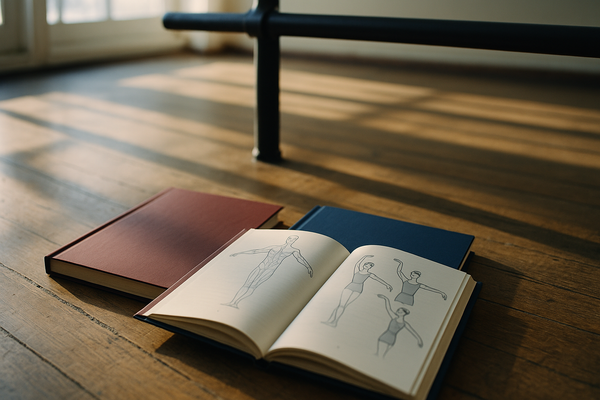
Teachers sometimes tell dancers to squeeze the glutes to correct pelvic tilt or lack of turnout engagement, but this cue often has the opposite effect by inhibiting range of motion in the hip joint. Instead, dancers should focus on activating deep rotators to help stabilize and allow the hip to move correctly in the socket. By changing from negative corrections to active instructions, teachers notice greater understanding and retention among students, with dancers cultivating greater awareness of their body on a skeletal and muscular level.
The most effective way to translate oblique corrections into instructions that are more clearly understood is by referencing the dancer's anatomy. This anatomically-informed approach represents a significant departure from traditional directive feedback that relies on metaphor or external imagery alone.
Why Kinesthetic Feedback Outperforms Verbal Corrections in Motor Learning
The most effective technique for conveying information is kinesthetic feedback. Instead of telling or showing students what to do, instructors can physically place them in the appropriate position and run them through the desired motion. Verbal feedback is the least effective technique for teaching because verbal information does not transfer as quickly or effectively to the neuromuscular level as other types of feedback.
This research finding has significant implications for how teachers structure class time and allocate attention. While verbal corrections remain necessary for efficiency in group settings, the science suggests that one-on-one kinesthetic adjustment during technique class or private lessons may accelerate learning more than extended verbal explanations from across the room.
How Somatic and Brain-Compatible Methods Are Entering Mainstream Studio Practice
Traditional dance instruction emphasizes technique while limiting attention to nervous system development and embodied meaning-making, though empirical support exists for polyvagal theory, motor learning science, somatic education, and phenomenology. Teachers are using biomechanical cueing to reorient dancers to sensation over forms, recognizing that somatic awareness activates the body's deep reflexes and can be taught in ways that do not weaken technique but strengthen the relationship with it.
This shifts pedagogy from output to inquiry, and teachers do not have to overhaul their entire curriculum to use these strategies. Mirrorless combinations or improvisation scores reflect how space, effort, and attention shift when visual feedback is absent. Counts can map rhythm, but they do not guide sensation; layering cues like "Fold, swing, and…" instead of just "5, 6, and…" embeds musicality with qualitative information, giving dancers both timing and intention and helping them embody the phrase rather than just execute it.
Dance IQ's Brain-Based Dance classes include the work of Anne Green Gilbert called "BrainDance" or Brain-Compatible Dance, and incorporate somatic instruction from Dr. Martha Eddy's BodyMind Dancing, which blends Laban Movement Analysis, Bartenieff Fundamentals, and Bonnie Bainbridge Cohen's Body-Mind Centering.
Professional Development Standards Are Rising for Private Studio Teachers
The National Dance Education Organization's Certificate in Dance Education (CiDE) supports all dance educators working in diverse teaching environments such as PreK-12, colleges, private studios and schools of dance, performing arts organizations, and community centers. The certification requires teachers to show evidence of possessing a strong, well-rounded background in dance, pedagogy, history, research, learning theory, and disabilities education, which is especially important for private sector educators teaching in studios, performing arts organizations, and community centers.
The DEL Institute's yearlong online professional learning experience for dance educators seeks to deepen teaching practice, strengthen pedagogy, and build practical dance teaching skills. Participants engage in a sequential curriculum, receive weekly feedback from expert faculty, connect with a supportive cohort, and design a final curriculum project rooted in their own teaching context.
NDEO's Creative Dance in Early Childhood course (Spring 2026) elevates teaching through comprehensive online training for educators committed to fostering cognitive, physical, and social development of children aged 3 to 8, delving into child development principles and Brain-Compatible Dance concepts with key elements of Space, Time, Force, and Body tailored for young learners. The course concludes with creating a creative dance curriculum and detailed lesson plans.
What This Means for Dance Studio Owners
Editorial analysis — not reported fact:
Studio owners face a genuine fork in the road. Continuing to rely on inherited corrections and informal lesson planning will increasingly position a studio as outdated, especially as parents and older students gain access to anatomical and neuroscience content through social media and online platforms. The competitive advantage now lies in demonstrating both structure and scientific literacy.
The practical path forward involves three concurrent investments. First, adopt or develop a documented curriculum with level-by-level progressions and SMART goals that can be shared with parents and used for teacher onboarding. Second, invest in professional development that covers motor learning science, anatomical cueing, and somatic methods, whether through NDEO's CiDE, the DEL Institute, or Brain-Compatible Dance training. Third, audit common verbal corrections for anatomical accuracy and replace inhibiting cues (such as "squeeze the glutes") with activating, anatomy-referenced instructions.
Studios that make these shifts will not only improve learning outcomes but also build a stronger value proposition for tuition rates, attract teacher candidates who prioritize pedagogy, and differentiate themselves in an increasingly crowded market where curriculum structure and teaching quality have become table stakes.
Sources & Further Reading
- Dance Studio Syllabus — Level-by-level curriculum with built-in lesson plans and video support for studio teachers
- Dance The Cutting Edge Basic Syllabus & Platinum Membership — Comprehensive syllabi for ages 3–18 across 16+ genres with 4,000+ tutorial videos
- National Dance Education Organization (NDEO) — Certificate in Dance Education (CiDE) and Creative Dance in Early Childhood course (Spring 2026)
- DEL Institute — Yearlong online professional learning program for dance educators with sequential curriculum and expert feedback
- Anne Green Gilbert's BrainDance and Dr. Martha Eddy's BodyMind Dancing — Somatic and brain-compatible pedagogical frameworks integrating Laban Movement Analysis, Bartenieff Fundamentals, and Body-Mind Centering
Editorial coverage of publicly reported industry developments. Dance Studio Journal has no commercial relationship with any companies, studios, competitions, conventions, or organizations named.