Athlete's Edge: Training Dancers Like Elite Performers
Injury data, Olympic breaking, and parent expectations are driving studios to add conditioning, recovery, and performance psychology coaching in 2026.
Key Takeaways
- Injury rates drive conditioning adoption: Dancers sustain 0.62-5.6 injuries per 1,000 exposure hours, with 72% attributed to overuse, prompting studios to add strength training and recovery protocols that reduce professional ballet injury risk by up to 82%.
- Breaking's 2024 Olympic debut accelerated athlete reframing: The Paris 2024 Games marked the first time a dance discipline achieved Olympic recognition as a sport, validating the muscular strength, endurance, speed, agility, and psychological readiness essential to dance performance.
- Cross-training improves performance without aesthetic penalty: Current research shows dancers who supplement technique classes with targeted strength, mobility, and recovery work experience enhanced power, endurance, aerobic fitness, and fewer injuries with no negative impact on artistry.
- Year-round competitive schedules create burnout risk: Young dancers often train as intensively as junior athletes in other sports but lack built-in rest periods, leading to overuse injuries, stress fractures, and mental burnout that peaks in the mid-teen years and drives dropout rates.
- Studios monetize recovery and conditioning as retention tools: Well-run facilities now offer small-group conditioning sessions, seasonal workshops, and recovery memberships as ancillary revenue streams that loyal families pay for, improving business stability and meeting parent expectations for injury prevention.
- Performance psychology coaching enters mainstream studio practice: Mental skills training including goal setting, concentration, emotion management, imagery, and the "three Rs" protocol (release, reset, refocus) are now standard in pre-professional programs and audition preparation contexts.
Why treating dancers as elite athletes matters in 2026
The dance industry is undergoing a fundamental shift in how it prepares and supports performers, driven by mounting injury data, parent awareness of overtraining risks, and the visibility breaking gained through its historic debut at the Paris 2024 Olympic Games. For the first time, a dance-based discipline achieved Olympic recognition as a sport, validating what dance medicine researchers have documented for years: dancers require the same complement of athletic attributes as elite competitors in any recognized sport.
According to research published in the Journal of Dance Medicine & Science, dancers sustain injury rates ranging from 0.62 to 5.6 injuries per 1,000 dance exposure hours, with 72% of these injuries attributed to overuse mechanisms. These statistics have prompted studios nationwide to add conditioning, recovery services, and performance psychology coaching to their program offerings, yet most dance teachers lack formal athletic training knowledge and studios struggle to integrate evidence-based protocols without sacrificing technique instruction time.
Cross-training and conditioning protocols backed by current research
Current literature applying cross-training in dancers has shown enhanced performance, power, endurance, aerobic fitness, and improved injury prevention with no aesthetic consequence. Studies consistently demonstrate that dancers who cross-train have fewer injuries and perform better across technical metrics.
Effective cross-training protocols include twice-weekly strength sessions focusing on full-body movements such as squats, lunges, and planks, targeted core work for trunk control and turn stability, and low-impact cardio including swimming or cycling to build aerobic capacity without pounding joints. Lower extremity and core strengthening has been shown to reduce injury risk in professional ballet dancers by 82% in dancers completing structured strength training programs.
A 2024 University of North Carolina thesis examining ballet as cross-training for athletes found significant improvements in flexibility and agility, with mixed results in balance and speed, and participants reported enhanced physical attributes and a positive perception of ballet's applicability to their primary sports. The findings reinforce that dance training itself functions as high-level athletic conditioning when properly structured.
Age-appropriate conditioning implementation
For recreational dancers attending classes once a week, the focus remains on immersing themselves in technique without the need for additional conditioning. However, as dancers progress to competitive levels, the emphasis on cross-training becomes more pronounced. An issue with cross-training arises when classes are not suitable for the dancer's age or level of experience; younger students need different training protocols from advanced performers.
Competitive dance operates year-round, and young dancers are specializing at earlier ages, often training as much as junior athletes in other sports but without the rest periods those sports build in. Young dancers become more vulnerable to overuse injuries, stress fractures, and tendon problems, and often experience mental burnout without adequate rest. The peak in dropouts from competitive programs occurs in the mid-teen years, a retention crisis that proper conditioning and recovery protocols can help address.
Recovery science entering mainstream studio practice
Well-run studios now routinely offer recovery services and cross-training for dancers, reflecting a thoughtful response to where dance training has evolved and shifting expectations around performance, injury prevention, and dancer longevity. This trend mirrors larger fitness industry developments that have been reshaping how athletes are trained and supported for years.
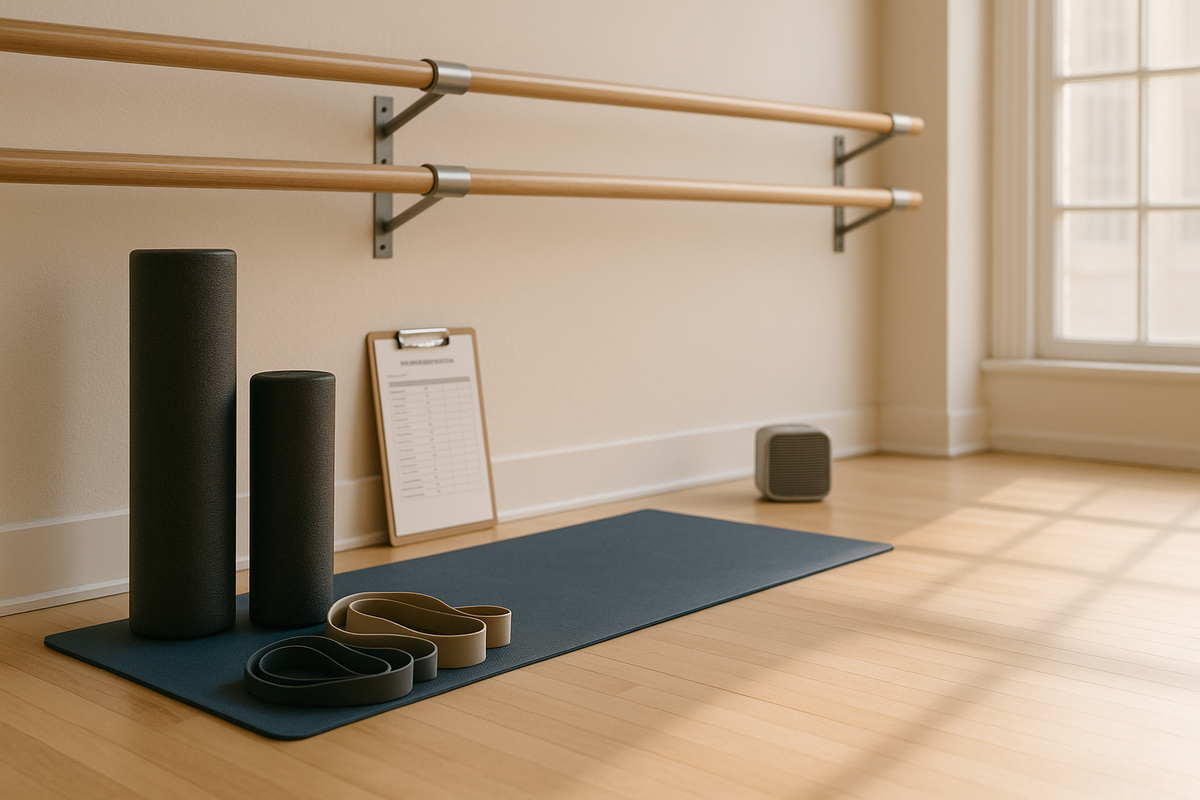
Your body needs time to repair the microtears that occur in muscles during training; rest is when your body repairs itself and builds strength. Skipping rest days or not getting enough sleep can lead to burnout and injuries. Stretching and foam rolling after class reduces soreness the next day by increasing blood flow and recovering from the buildup of lactic acid in muscles.
Focusing on strength and conditioning helps build the muscular endurance needed for dance, but should be balanced with proper stretching and foam rolling to aid recovery and flexibility. Studios monetize these services through small-group additions to regular classes, small-group conditioning sessions, seasonal workshops, and recovery memberships. Loyal families often pay for extras that benefit their dancer, and studios that offer these add-ons are in a more stable business position.
Performance psychology and audition preparation strategies
A leading mental performance coach recommends starting audition preparation months in advance by doing a brief mental warm-up each time you train, which could be anything from deep breathing to hearing a specific song to smelling a calming scent, as long as it is consistent and helps you relax. Instead of trying to shut out stress entirely, she recommends reframing nervous feelings and working with your nerves, encouraging dancers to "sublimate" their feelings of nervousness into excitement.
A sports psychology approach called the "three Rs" involves release (literally shaking off negative thoughts), reset (deep breathing), and refocus (energy on the next part of the audition). Mental skills that can specifically support a dancer's journey include strategies for goal setting, concentration, motivation, relaxation, confidence, emotion management, imagery, and leadership skills, all of which improve mental skills and consequently enhance physical performance.
Pro Dance Prep operates as the leading prep program in the nation to train dancers specifically for professional dance auditions, serving as a go-to for NFL Cheerleading audition training, NBA dancer audition training, and professional dance team audition training. The commercial audition prep ecosystem reflects how performance psychology coaching has moved from elite university programs into accessible formats for working dancers.
University and pre-professional program models leading the shift
Dean College offers access to an Athletic Training Clinic for the Performing Arts, providing an on-campus clinical setting focused on injury prevention, rehabilitation, and performance optimization for dancers and performing artists. The University of Michigan Dance Building, opened in September 2021, is a 24,000 square foot facility featuring four large studios, a performance venue, and dedicated cross-training and treatment areas.
Houston Ballet Academy's daily schedule includes five to ten hours of classes and rehearsals in technique, pointe, men's work, repertoire, variations, pas de deux, contemporary and stylistic dance, as well as stretch and strengthening, mental skills training, and health and well-being instruction. These integrated models demonstrate how top-tier pre-professional training now treats conditioning, recovery, and mental performance as co-equal priorities with classical technique.
What This Means for Dance Studio Owners
Editorial analysis — not reported fact:
Studio owners face a strategic decision: continue offering technique-only training and risk losing serious students to facilities that provide integrated athletic support, or invest in staff education and program additions that meet the expectations parents now bring from youth sports models. The data on injury reduction and performance gains makes the value proposition clear, but implementation requires careful scoping to avoid overwhelming instructors or diluting technical standards.
Start by identifying your most vulnerable population: competitive dancers aged 12 to 16 training more than 10 hours per week. This cohort faces the highest overuse injury risk and the steepest dropout rates, making them the ideal target for pilot conditioning programs. A twice-weekly 30-minute small-group session focused on lower extremity and core strengthening, priced at $40 to $60 per month, generates ancillary revenue while directly addressing the 82% injury risk reduction documented in research.
For studios without staff qualified to teach conditioning, partnerships with local physical therapists, certified athletic trainers, or strength coaches create expertise access without full-time hiring commitments. Many sports medicine providers welcome dance referrals and will co-design age-appropriate protocols. Document participation and track injury rates before and after implementation; this data becomes a powerful retention and enrollment tool when communicating with parents.
Mental skills training requires less specialized equipment but equally intentional integration. Begin by incorporating five-minute post-class protocols: guided breathing, positive self-talk exercises, or visualization practice. As comfort grows, seasonal audition prep workshops taught by guest clinicians or formatted as peer-led sessions for senior company members provide low-cost, high-impact offerings that differentiate your studio in competitive markets.
The studios thriving in 2026 recognize that "treating dancers like athletes" is not a trend but a permanent recalibration of professional standards. Families increasingly expect injury prevention protocols, recovery resources, and mental performance support as table stakes, not premium add-ons. Studios that build these elements into their core value proposition today will retain serious students tomorrow and avoid the mid-teen dropout cliff that destabilizes enrollment projections and revenue forecasts.
Sources & Further Reading
- Journal of Dance Medicine & Science research on dancer injury rates — epidemiological data on overuse mechanisms and injury incidence per 1,000 exposure hours
- Breaking at the Paris 2024 Olympic Games — historic Olympic debut of a dance-based discipline as recognized sport
- Current literature on cross-training in dancers — research showing performance and injury prevention benefits with no aesthetic consequence
- Lower extremity and core strengthening injury reduction study — 82% injury risk reduction in professional ballet dancers completing strength programs
- Dean College Athletic Training Clinic for the Performing Arts — on-campus clinical model for injury prevention and performance optimization
- Houston Ballet Academy pre-professional training structure — integrated daily schedule including mental skills training and health programming
- Pro Dance Prep audition training programs — commercial preparation for professional dance team auditions
Editorial coverage of publicly reported industry developments. Dance Studio Journal has no commercial relationship with any companies, studios, competitions, conventions, or organizations named.